

Risk Management · 2025
In this section3 topics
Risk Management Policy & Plan
Policy & Plan Description
In an increasingly dynamic and complex business environment, the Company is presented with diverse risks, challenges, and opportunities. Acknowledging the critical importance of robust risk management practices, the Company is committed to implementing Enterprise Risk Management (ERM) as an integral mechanism for effectively mitigating risks while fostering opportunities to achieve sustainable growth. By implementing ERM, the Company aims to keep risks at an acceptable level, aligning with its vision, mission, goals, and business strategies.
To ensure a standardized and holistic approach to risk management, the Company has adopted the COSO ERM 2017 Framework (COSO Enterprise Risk Management Framework) as the foundational guideline for enterprise-wide operations. This globally recognized framework enables the Company to systematically identify, assess, and manage risks while aligning risk management initiatives with strategic planning to support the achievement of its long-term objectives. To enhance the effectiveness of its risk management practices and ensure alignment with the COSO ERM 2017 Framework, the Company has established the following risk mana gement plan:
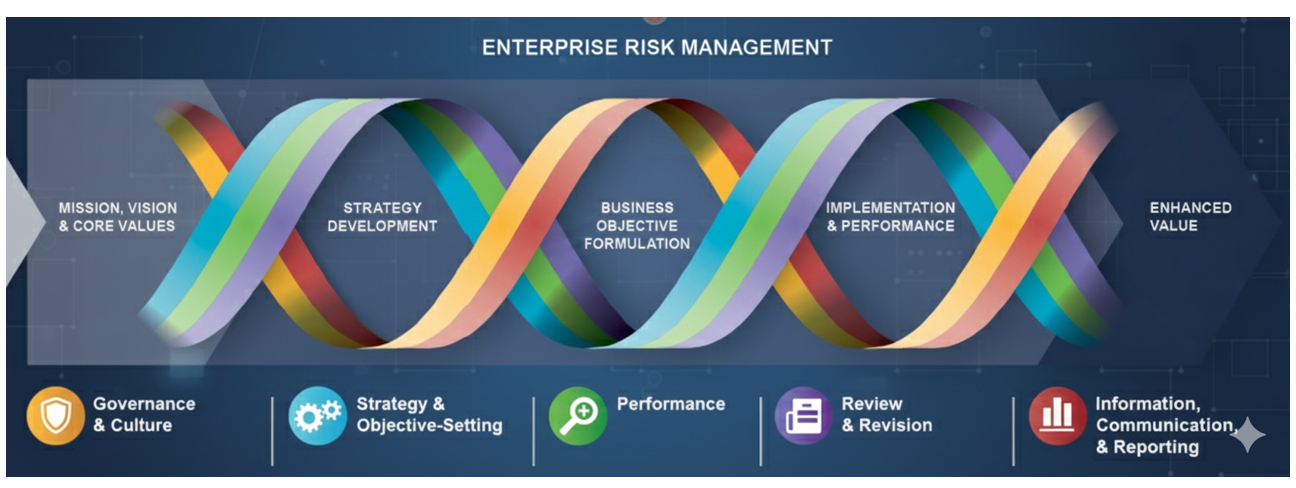
1.Governance and Organizational Culture
The Board of Directors has appointed the Risk Management Committee to establish the framework, policies, and risk management plans. To ensure checks and balances, the Board of Directors has also assigned the Audit Committee to oversee and monitor risk management to ensure alignment with the established plans and policies. The Risk Management Committee regularly coordinates with the Audit Committee through dedicated working groups and committee secretaries to discuss and communicate key risks, integrate risk management with internal controls, and report risk management outcomes to the Board of Directors.
The Company has established a Risk Management working team, led by the Managing Director and composed of Management and department managers. This working team is responsible for risk ownership and is required to prepare risk management reports for submission to the Risk Management Committee, which in turn reports to the Board of Directors.
Additionally, the Risk Management Committee has developed initiatives to promote awareness of risk management and sustainable development among directors, Management, and employees. The committee aims to embed a risk management culture as an integral part of the organization's processes at all l evels.
2 .Risk Management Plan
Strategy and Objective Setting
Analyze and identify risk factors that may impact the achievement of business strategies, while assessing the likelihood and potential impact of risks.
Prioritize risks to ensure effective and appropriate risk management.
Risk Management Performance
Establish risk management measures based on the 4Ts framework (Tolerate, Treat, Terminate, and Transfer) to ensure an appropriate, comprehensive, and strategic response to risks, aligning with the organization's strategic objectives.
Integrate risk management into business planning and decision-making processes to enhance effectiveness.
Review & Revision
Ensure alignment with the organization’s business context, strategies, and objectives to develop appropriate risk management approaches.
Continuously review and enhance risk management processes, ensuring flexibility to adapt to evolving business challenges and environmental changes.
Information Communication & Reporting
Communicate risk-related matters across all levels, ensuring stakeholders are informed of key risks and response strategies.
Disclose critical risk-related information and potential impacts to support well-informed decision-making by stakeholders.
In addition to risk management under the COSO ERM 2017 framework, the Company has adopted the Three Lines of Defense model to enhance independence and effectiveness in control, oversight, and auditing. This approach ensures compliance with established risk management policies and processes, clarifies roles and responsibilities within the organization, and strengthens stakeholder confidence. It also supports sustainable organizational development through the continuous improvement of the risk management system. The defense structure is as follows: 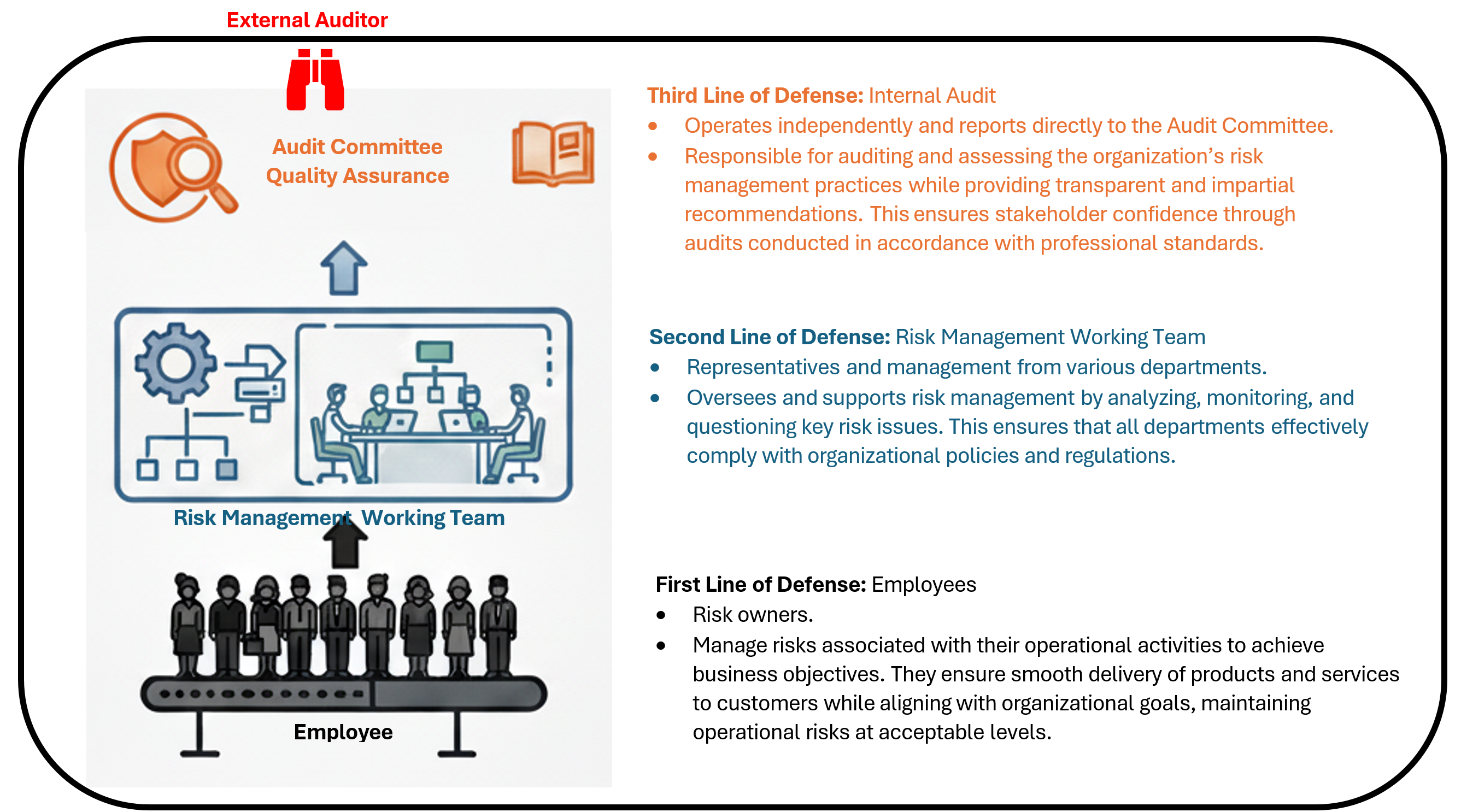
Risks to the Company's Business Operations
Risk Register
| Risk Name | Risk Characteristics | Consequences | Management Measures | Related Risk Factors |
|---|---|---|---|---|
| Risk from Changing in Business Model of Vendors | The rapid evolution of the current environment and technology compels manufacturers to adjust their business models to remain relevant and meet changing customer demands. |
| Recognizing these risks, the Company has implemented an effective risk management plan, ensuring no significant impact from these risks in 2025. Key risk mitigation measures include:
| 728 · Description: Volatility in the industry in which the company operates · Info category: STRATEGIC_RISK · 732 · Description: Changes in technologies · Info category: STRATEGIC_RISK · 733 · Description: Business operations of partners in the supply chain · Info category: STRATEGIC_RISK |
| Risk from Technological Advancements Affecting Inventory | In the current era of rapid technological progress, the Company faces significant risks related to inventory obsolescence and its ability to align with evolving market demands. |
| The Company recognizes the critical importance of effectively managing this risk. In 2025, the Company successfully mitigated the associated risks, resulting in minimal adverse impacts. This achievement was made possible through the implementation of the following risk management strategies:
| 732 · Description: Changes in technologies · Info category: STRATEGIC_RISK · 743 · Description: Product obsolescence · Info category: OPERATIONAL_RISK · 1721 · Description: Inventory risk · Info category: OPERATIONAL_RISK |
| Risk from Competition and Low Gross Profit Margin | The wholesale business of computer equipment, software, and mobile phones operates in a highly competitive industry, where low pricing is often used as a primary strategy to attract customers. |
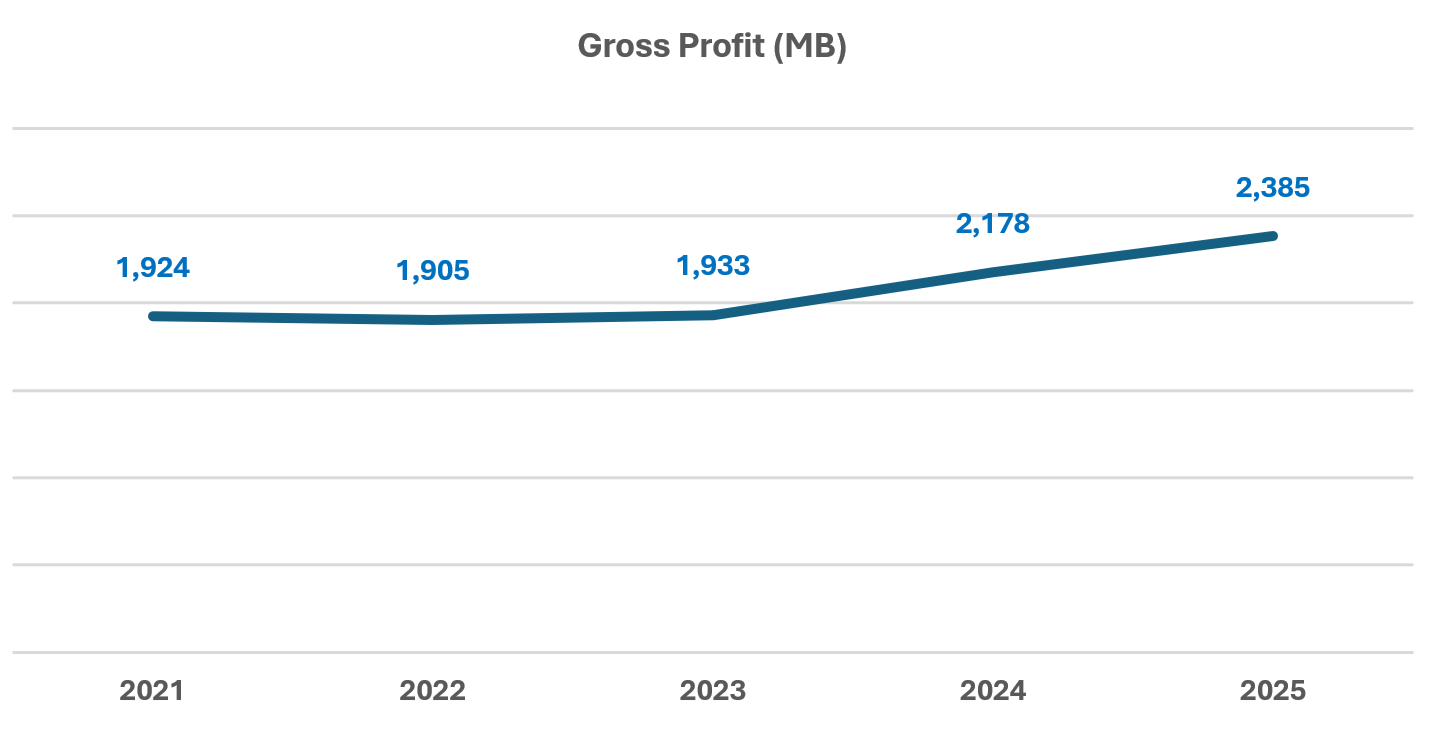
| In 2025, the Company’s gross profit increased compared to the previous year, as detailed below. With over 25 years of industry experience, the Company has effectively planned and managed risks in this area, ensuring that risks remain at an acceptable level. As a result, the Company has not been significantly impacted by these risk factors. The Company has outlined the following strategies to mitigate risks associated with market competition and low gross margins:
| 1714 · Description: Competition risk · Info category: STRATEGIC_RISK |
| Risk from Reliance on Human Resources | Relying on specific groups or individuals for business operations is a significant risk that may impact the organization. This is especially critical in the current environment, where technology professionals are in high demand, potentially leading to talent attrition or brain drain. |
| In 2025, the Company recorded 88 voluntary resignations, representing 10.73% of the workforce, a significant decrease compared with 2024. As a result of the risk management measures implemented as outlined below, the Company was able to recruit sufficient replacement personnel in a timely manner and was not materially affected by risks associated with reliance on key personnel:
| 738 · Description: Reliance on employees in key positions · Info category: OPERATIONAL_RISK · 739 · Description: Shortage or reliance on skilled workers · Info category: OPERATIONAL_RISK |
| Risk of Dependency on a Limited Number of Key Vendors | In the technology import business, relationships with key vendor are critical to operational success. Reliance on a limited number of key vendors may create significant risks to business operations. |
| In 2025, the Company successfully managed its revenue and profit in line with its business plan while maintaining relationships with key vendors. As a result, this risk has not had a significant impact on the Company. This achievement is attributed to the Company's extensive experience in continuously and effectively planning risk management. To mitigate the risk of dependency on a limited number of key vendors, the Company has implemented the following risk management measures:
| 735 · Description: Reliance on large partners / distributors or few partners / distributors · Info category: STRATEGIC_RISK |
| Geopolitical Risks | In the context of international business, geopolitical issues play a significant role in creating risks for operations, particularly for import businesses that rely on supply chains spanning multiple countries. Geopolitical tensions, such as sanctions and international trade disputes, can impact the Company’s compliance with legal requirements, procurement of goods, and business relationships. |
| In 2025, the Company has not been significantly impacted by these risks. However, recognizing the potential risks arising from geopolitical conflicts, the Company has implemented risk management measures to maintain its commercial relationships as follows:
| 731 · Description: Policies or international agreements related to business operations · Info category: STRATEGIC_RISK · 1715 · Description: Economic risk · Info category: STRATEGIC_RISK · 755 · Other name: Geopolitical Risks · Description: Other · Info category: OPERATIONAL_RISK |
| Risk from the Unites States Tariff Policy | In the context of conducting an import-based business, the United States customs tariff policy and related trade measures represent key factors that may affect the Company’s cost structure and competitive position. Volatility in import duty rates, changes in trade policies, or retaliatory trade measures between countries may impact the supply chain, product acquisition costs, and pricing in the Thai market. |
| In 2025, the Company has not experienced any material impact from this risk. Nevertheless, the Company recognizes the uncertainty associated with tariff policies and has implemented the following risk mitigation measures:
| 740 · Description: Shortage or fluctuation in pricing of raw materials or productive resources · Info category: OPERATIONAL_RISK · 731 · Description: Policies or international agreements related to business operations · Info category: STRATEGIC_RISK |
| Risk from Government Instability | The Company's core business involves the sale of products and services in a Business-to-Business (B2B) model, which is closely linked to economic factors and both public and private sector projects. In particular, it is impacted by government spending and operations. Political instability or unexpected changes in government policies may directly affect market demand for products and services. An economic slowdown and reduced domestic purchasing power could lead to a decrease in emand for the Company’s products and services, impacting sales and overall performance. |
| In 2025, the Company has not experienced any material impact from these risks. However, the Company acknowledges the uncertainty posed by government instability and has implemented risk management measures to mitigate these potential impacts, as follows:
| 729 · Description: Behavior or needs of customers / consumers · Info category: STRATEGIC_RISK · 730 · Description: Government policy · Info category: STRATEGIC_RISK · 733 · Description: Business operations of partners in the supply chain · Info category: STRATEGIC_RISK · 1715 · Description: Economic risk · Info category: STRATEGIC_RISK |
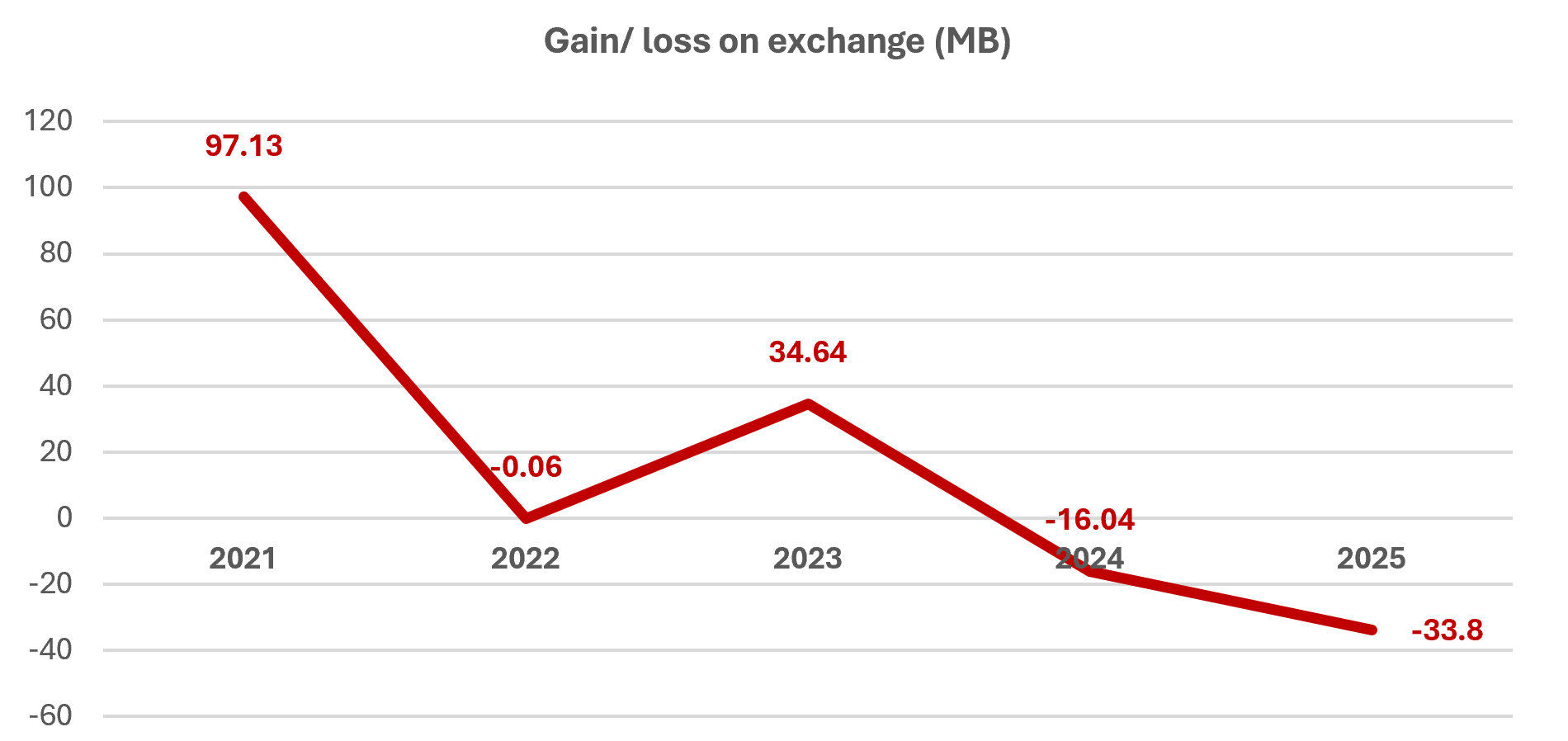
| Foreign Currency Exchange Risk | Foreign exchange risk (FX) is one of the key risks faced by import-oriented businesses, as it can directly affect profitability, product costs, and financial management. Effective management of this risk is therefore essential to maintaining competitiveness and financial stability |
In 2025, the Company incurred a loss from foreign exchange accounting transactions, amounting to 34 million Baht, as detailed below.
| Recognizing the risks associated with foreign exchange fluctuations, the Company has developed a risk management plan to mitigate the impact of exchange rate volatility, as follows:
| 764 · Description: Fluctuation in exchange rates, interest rates, or the inflation rate · Info category: FINANCIAL_RISK |
| Credit Risk | As a domestic wholesale business, the Company primarily serves small and medium-sized enterprises (SMEs) with limited access to financial institution credit. Extending credit to customers is a key strategy to drive sales, but it also carries the risk of bad debt if customers fail to meet their payment obligations. This could negatively impact cash flow, the Company’s ability to meet financial commitments, and overall financial stability. Therefore, effective risk management requires stringent control systems and continuous monitoring. |
| In 2025, the Company experienced an impact from bad debt, accounting for less than 1% of total revenue. This was due to the Company's implementation of the following risk management measures:
| 763 · Description: Default on payment or exchange of goods · Info category: FINANCIAL_RISK |
| Sustainability Risk | Sustainability has become an increasingly critical issue in the business sector, particularly in the IT industry, which operates within a complex global supply chain. |
| In 2025, while the Company has not yet experienced significant direct impacts from these risks, it has established proactive risk management measures to mitigate potential future impacts, including:
| 1717 · Description: ESG risk · Info category: STRATEGIC_RISK |
| Environmental Pollution Risk | In an era where sustainability and environmental protection are critical to business operations, companies engaged in importing and wholesaling must navigate environmental challenges throughout their supply chain from importation and distribution to end-of-life product management. Effective environmental risk management is essential to minimizing negative environmental impacts while enhancing corporate credibility. |
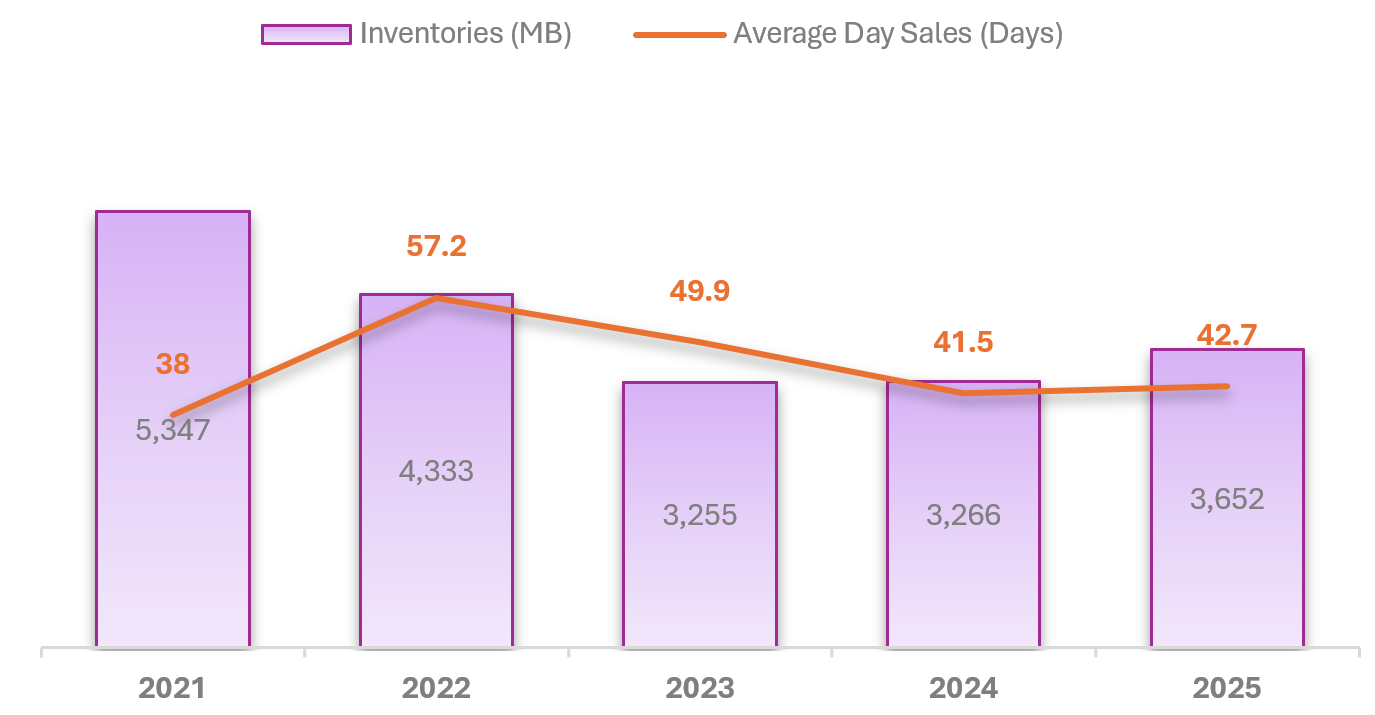
| Although the Company has not yet experienced a significant impact from these risks in 2025, managing such risks requires time and resources due to the Company's extensive operations. The Company imports products from over 170 vendors across multiple countries and distributes them to more than 10,000 customers. Currently, the Company is in the process of assessing the feasibility of electronic waste management and promoting the use of sustainable materials. Some initial measures have already been implemented, as detailed below:
| 1717 · Description: ESG risk · Info category: STRATEGIC_RISK · 751 · Description: Impact on the environment · Info category: OPERATIONAL_RISK |
| Workplace Environmental Risk | Workplace environment risks encompass health, safety, and employee satisfaction factors, all of which influence operational efficiency and corporate sustainability. Poor management of these risks may lead to legal issues, injuries, property damage, or decreased employee morale. |
| In 2025, the Company expanded the scope of its accident data collection to cover all operational areas and all relevant activities, including incidents occurring during transportation. An electronic “Accident Occurrence” database has been established to ensure standardized incident recording and to provide employees, supervisors, and relevant functions with information to monitor cases, analyze root causes, and implement preventive measures to systematically reduce recurrence. In 2025, the Company recorded a total of 15 work-related accidents, comprising 12 cases in the warehouse and 3 cases during transportation. None of these incidents resulted in fatalities, serious injuries, or lost-time cases. To prevent and mitigate risks related to safety, occupational health, and the working environment, the Company implemented the following key measures:
In 2025, the Company reported no losses or damages arising from workplace environmental risks. | 749 · Description: Safety, occupational health, and working environment · Info category: OPERATIONAL_RISK · 1717 · Description: ESG risk · Info category: STRATEGIC_RISK |
| Risks from Epidemics and Severe Infectious Diseases | Epidemics and severe infectious diseases pose significant risks to business operations, affecting employee health, workplace functionality, and stakeholder confidence. This is particularly critical for import and wholesale businesses that require constant interactions with domestic and international partners and customers. |
| Since COVID-19 was reclassified as an endemic disease in Thailand in 2022, the Company has not experienced significant impacts from other epidemics. However, the Company has established the following risk management strategies to address future outbreaks:
In 2025, the Company did not incur any damage arising from epidemics and severe infectious diseases risks. | 749 · Description: Safety, occupational health, and working environment · Info category: OPERATIONAL_RISK · 1717 · Description: ESG risk · Info category: STRATEGIC_RISK · 1718 · Description: Pandemic risk · Info category: STRATEGIC_RISK |
| Human Rights Risks | The Company recognizes the importance of respecting human rights throughout the supply chain and has implemented comprehensive human rights due diligence across its business operations to identify, assess, prevent, mitigate, monitor, and report potential human-rights risks. This due diligence covers both the Company’s own operations and the supply chains of its suppliers. As the Company operates as an importer and wholesaler of IT equipment and does not operate manufacturing facilities, it assesses its overall human-rights risk exposure to be low. Nevertheless, the Company has established control measures and ongoing monitoring to ensure that any impacts remain low or within acceptable levels. The Company conducts comprehensive human rights due diligence by integrating it into the organization’s risk management and good corporate governance framework. Key steps include: risk identification; risk assessment; the establishment of preventive and mitigation measures; monitoring and review; and communication and reporting. The Company assesses risks prior to entering into transactions or business relationships through the relevant functions and conducts periodic reviews as appropriate. The primary assessment criteria are the severity of potential impacts on stakeholders and the likelihood of occurrence, which are used to prioritize risk issues. |
| To control and manage risks within an acceptable level, the Company has implemented key measures that effectively mitigate human-rights risks. As a result, in 2025 the Company did not experience any impacts from these issues. The key measures implemented include:
To ensure the effectiveness of its human rights due diligence, the Company has established regular monitoring and review of human-rights risks through various mechanisms, such as grievance and whistleblowing channels, monitoring of occupational health and safety incidents, monitoring of incidents or complaints relating to personal data and information security, and periodic reviews of the business context or material business partners. Findings are consolidated and reported to the Risk Management Committee and the Corporate Governance and Sustainability Committee on a regular basis in line with the Company’s reporting cycle. | 758 · Description: Violations of laws and regulations · Info category: COMPLIANCE_RISK · 1717 · Description: ESG risk · Info category: STRATEGIC_RISK · 753 · Description: Impact on human rights · Info category: OPERATIONAL_RISK |
| Fraud and Corruption Risk | Corruption risks pose a significant threat to reputation, stakeholder confidence, and long-term sustainability. Without effective preventive measures, organizations may face financial losses, legal consequences, and severe reputational damage. |
| To address these risks, the Company has continuously implemented risk management measures. Since 2024, the Company has been a member of the Thai Private Sector Collective Action Against Corruption (CAC), which has strengthened and modernized our operating practices to better align with current conditions. The Company’s current risk management plan is as follows:
In 2025, the Company did not incur any damage arising from fraud and corruption risk. | 758 · Description: Violations of laws and regulations · Info category: COMPLIANCE_RISK · 759 · Description: Corporate Governance · Info category: COMPLIANCE_RISK · 754 · Description: Corruption · Info category: OPERATIONAL_RISK |
| Cyber Security Risk | In the digital era, information security is a critical concern for businesses, particularly for importers and wholesalers of IT equipment that handle large volumes of sensitive data, including customer information, financial transactions, and inventory management. Information security risks can lead to financial losses, reputational damage, and severe business disruptions. |
| In 2025, the Company was not affected by any information security risks, as proactive management and robust preventive planning were implemented as follows:
In 2025, the Company did not incur any damage arising from cyber security risk. | 744 · Description: Information security and cyber-attack · Info category: OPERATIONAL_RISK · 1720 · Description: System disruption risk · Info category: OPERATIONAL_RISK |
| Risk from Non-Compliance with Personal Data Protection Regulations | The Personal Data Protection Act B.E. 2562 has been enacted in Thailand to safeguard personal data and impose obligations on businesses that collect, use, and process such data. Non-compliance may result in legal penalties, reputational damage, and loss of customer trust. |
| In 2025, the Company did not experience any adverse impacts from non-compliance with personal data protection regulations. The Company has implemented comprehensive risk management measures, including:
In 2025, the Company did not incur any damage arising from risk from non-compliance with Personal Data Protection regulations. | 758 · Description: Violations of laws and regulations · Info category: COMPLIANCE_RISK · 744 · Description: Information security and cyber-attack · Info category: OPERATIONAL_RISK · 753 · Description: Impact on human rights · Info category: OPERATIONAL_RISK |
| Emerging Risk | In a rapidly evolving business landscape, IT import and wholesale businesses must navigate emerging risks that could impact` competitiveness and sustainable growth. The Company must adapt to new technologies, regulatory changes, and shifting market demands. |
| As a leading technology importer, the Company proactively addresses these challenges through the following strategies:
| 755 · Other name: Emerging Risk · Description: Other · Info category: OPERATIONAL_RISK |
Risks to Securities Holders' Investment
Risk Register
| Risk Name | Risk Characteristics | Consequences | Management Measures | Related Risk Factors |
|---|---|---|---|---|
| Risks Related to the Company’s Operating Results | Industry conditions and economic trends are key factors influencing investment returns. When the economy expands and the Company performs well, investors have a higher chance of receiving greater returns. Conversely, during economic downturns and declining the Company’s performance, investor returns are likely to decrease. | Investors may receive investment returns lower than expected if the economy slows down and the Company’s operating performance declines. |
| 768 · Description: Return from investment of securities holder · Info category: HOLDER_RISK |
| Risks Arising from Uncertainty of Expected Returns | The uncertainty of the expected rate of return is often caused by the volatility of security prices. Investors may sell securities at a lower price than anticipated or may not receive dividends or receive them at a lower level than expected. This lower-than-expected return may result from the issuer’s uncertain net cash flow, making shareholder returns unpredictable. | Selling securities at a lower-than-expected price or not receiving dividends, or receiving them at a lower-than-expected level. |
| 769 · Other name: Uncertainty in Return on Investment · Description: Other · Info category: HOLDER_RISK |