

MD&A · 2025
In this section4 topics
Overview of Operations
Overview of Operations
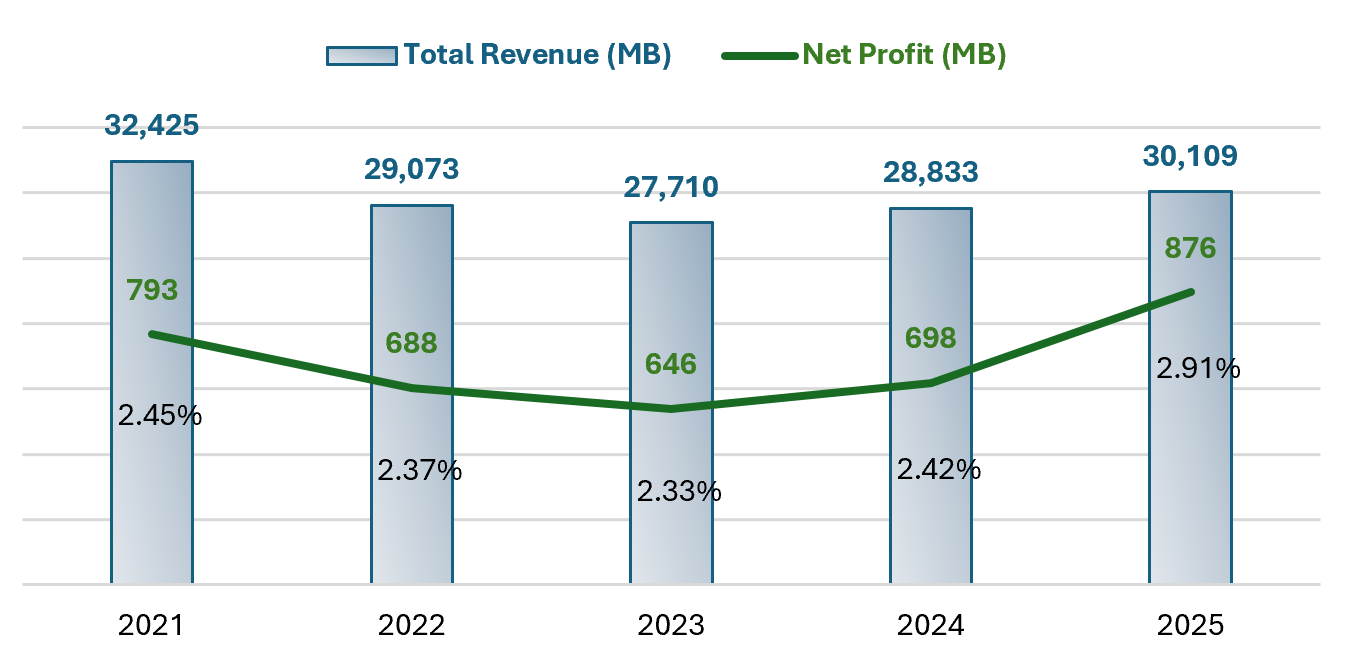
In 2025, the Company delivered strong performance, with total revenue of 30,109 million Baht, up 4.4% year-on-year. Net profit amounted to 876 million Baht, representing an increase of 25.6%, and cash flow from operations improved by 1,657 million Baht.
Beyond these solid results, the Company remains focused on long-term sustainable growth, guided by strong corporate governance and consideration of stakeholder impacts. While certain investments may not generate short-term returns such as expansion into new technologies within Others Business Unit, which may initially contribute limited revenue, they play a key role in mitigating the risk of overreliance on products that may face market saturation in the future.
The Company has also continued to invest in IT infrastructure to support long-term business development. This includes adopting modern data platforms such as Databricks for data storage and analytics, as well as enabling the development of AI solutions. In addition, the Company has implemented collaboration software such as Microsoft 365 and Zoho to enhance internal productivity, alongside ongoing process improvements.
Furthermore, the Company places strong emphasis on responsible business practices, maintaining integrity and prioritizing environmental stewardship. Examples include the use of solar energy within the organization and investments in solar energy businesses to promote broader adoption of clean energy. These initiatives reflect the Company’s commitment to stable and sustainable long-term growth.
Operating Results & Financial Condition
Operating Results & Profitability
The Company manages its product portfolio through 13 business units. However, it reports operating results for only four major business units; smaller Business Units contributing less than 10% of total revenue are aggregated and presented under “Others Business Unit”.
Revenue and gross profit for each business unit are shown in the table below.
Revenue of Business Unit
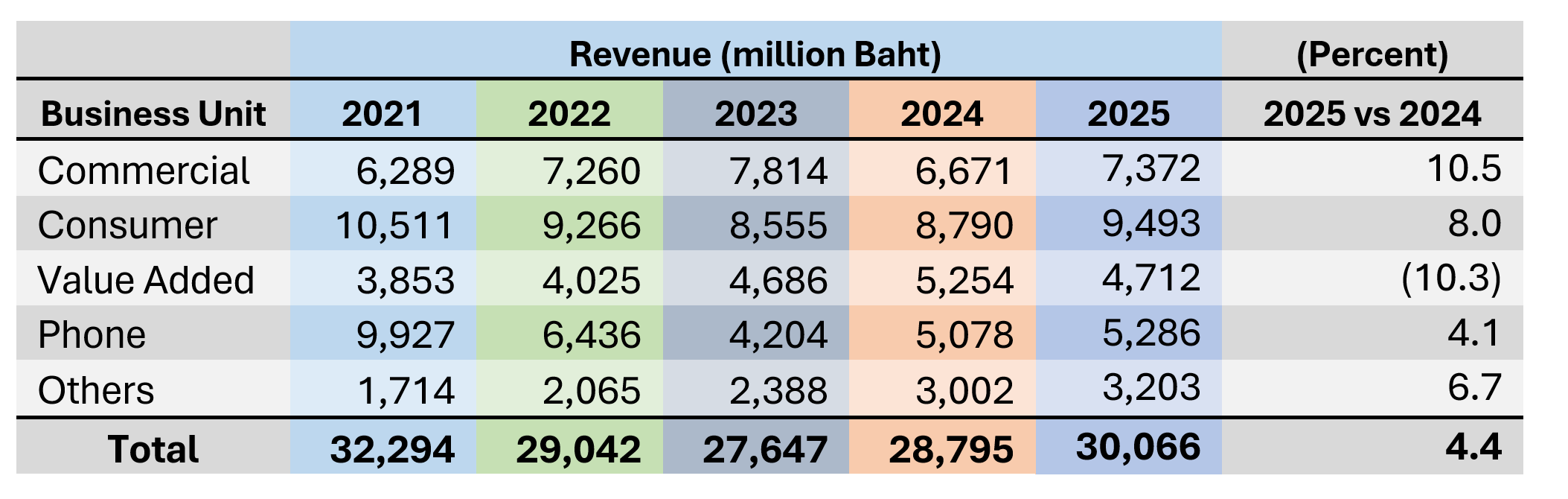
The Commercial Business Unit recorded a 10.5% increase in revenue, driven by large-scale project engagements in the second half of 2025.
Meanwhile, the Value-Added Business Unit reported a 10.3% decline in revenue year-on-year. The primary driver was a contraction in the Private Cloud product group following Broadcom’s acquisition of VMware and the subsequent significant price increases. As a result, several Private Cloud offerings based on VMware technology could no longer be resold. Although the Security business grew and partially offset the decline in gross profit from the Private Cloud business, it is classified as agency-based operations. Accordingly, the Company recognizes revenue only for the agency fee, calculated as sales net of the cost of goods or services. Consequently, revenue from this segment increased only marginally and was insufficient to offset the revenue loss from the Private Cloud business.
Gross Profit of Each Business Unit
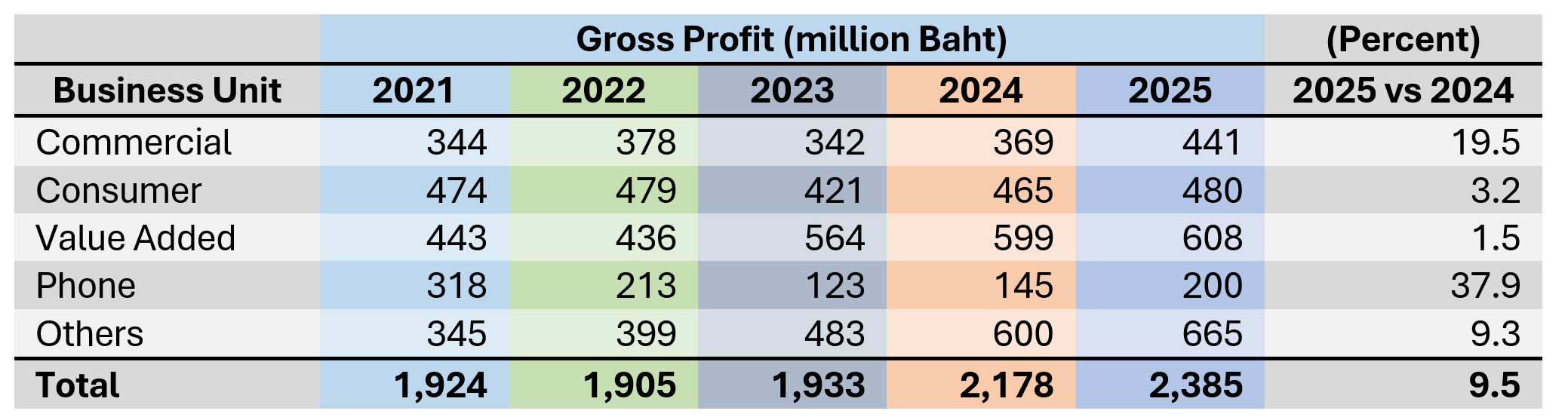
Overall, gross profit across the business units increased in line with revenue growth, except for the Value-Added Business Unit. Although revenue declined in this segment, gross profit still rose slightly, as sales of Private Cloud products decreased while Security product sales increased, partially offsetting the lost profit. However, Security products are classified as agency-based operations, under which the Company recognizes only the agency fee as revenue. As a result, reported sales were lower.
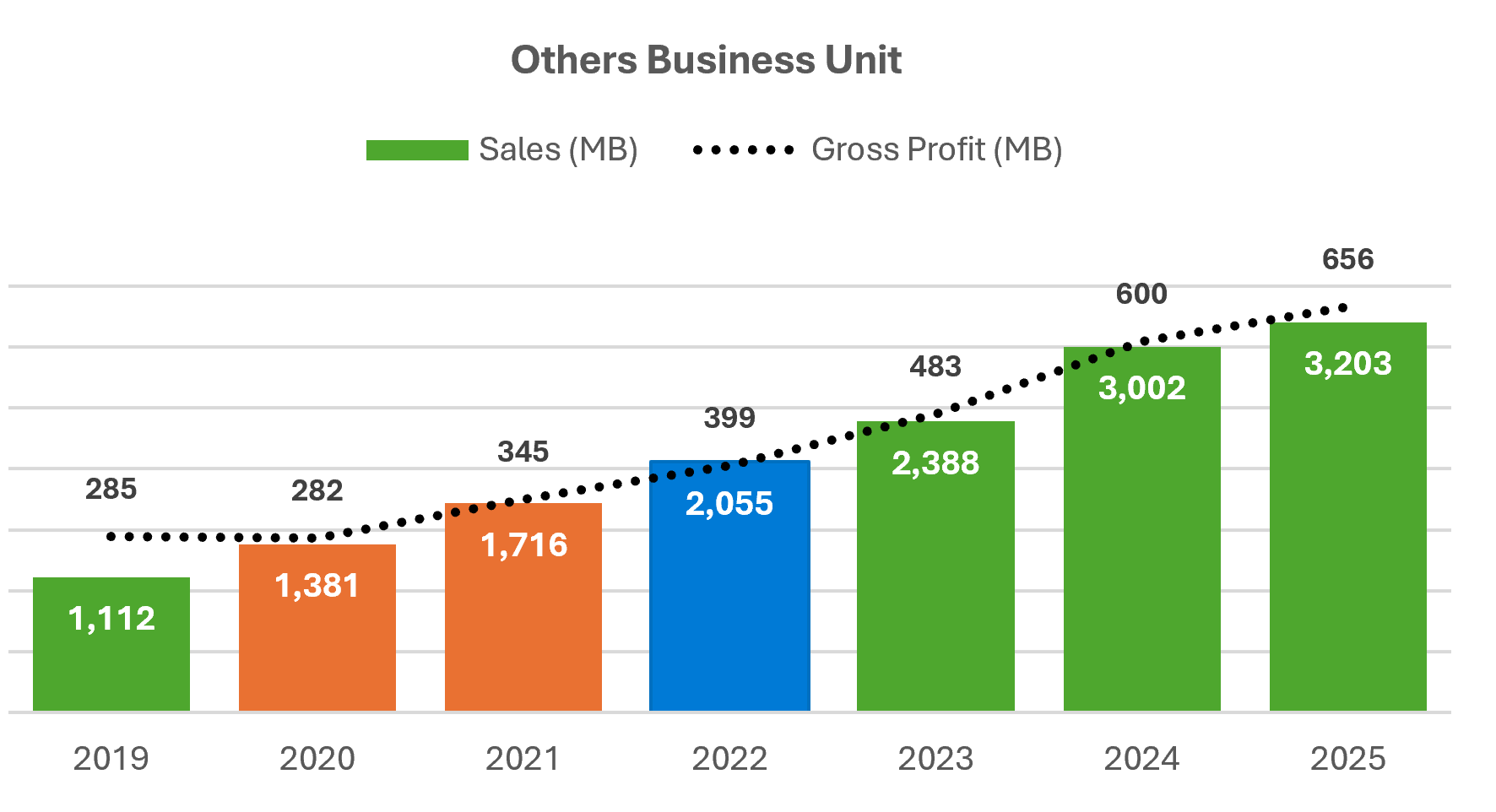
For the Others Business Unit, despite having the lowest revenue, it generated the highest profit, driven by continued investment in new technologies that has begun to deliver strong returns for the Company.
Consumer Business Unit
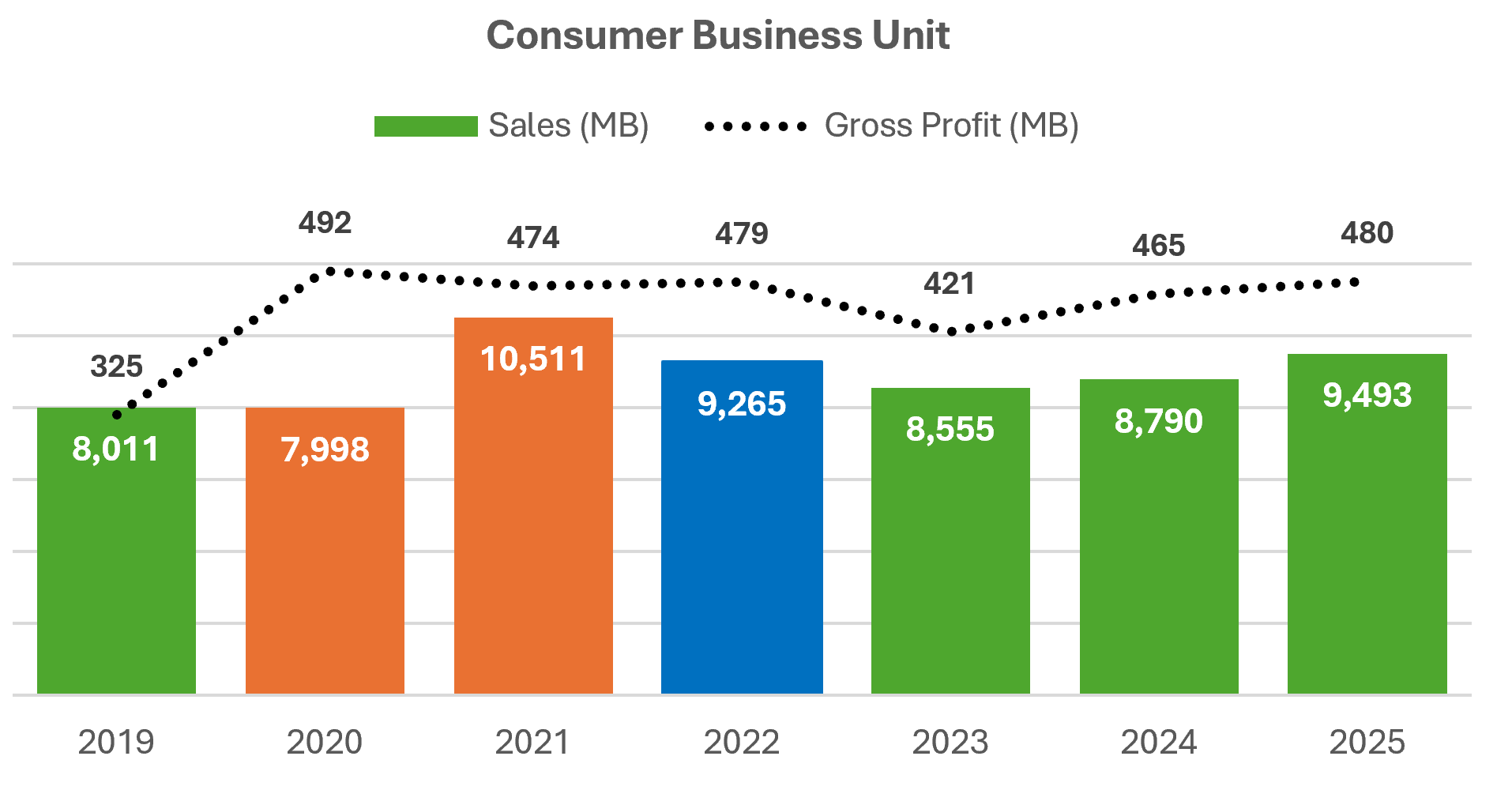
Sales and Gross Profit
The Consumer Business Unit’s core products are household personal computers. The overall market has been saturated since 2013. Thereafter, the market continued to contract, before rebounding during the COVID-19 pandemic in 2020–2021 (Orange) as travel restrictions significantly increased demand for IT equipment to support remote learning and work-from-home.
However, once the country began to reopen (Blue bars), demand eased and returned to normal in 2023 (Green), when all pandemic-related restrictions were lifted.
In 2025, the third year of normalized conditions, sales increased slightly. Looking ahead, sales are expected to depend primarily on household purchasing power and are not anticipated to deviate materially from the current level.
Factors That May Affect Future Performance
Personal computers are a mature, saturated product category with widespread adoption, and new models typically offer limited differentiation from previous generations. Consumers are therefore keeping devices for longer, with most purchases being replacement purchases, which may put downward pressure on sales.
However, advances in AI technology are a positive driver. Manufacturers are beginning to incorporate AI to enhance device capabilities. If these innovations can better meet consumer needs and deliver meaningful user benefits, they may accelerate replacement cycles and support a return to overall market growth.
Key downside risks that could impact this business unit include shortages of memory, storage devices, and a decline in consumer purchasing power.
Shortages of Memory and Storage Devices
As AI has become a critical emerging technology, companies that are unable to incorporate AI into their products and services may lose competitiveness and risk being displaced by firms that own AI capabilities. This has accelerated investment in AI infrastructure at a significant scale. Such investment requires substantial amounts of memory and storage devices, leading to supply constraints and rising prices.
These conditions may increase the prices of personal computers and extend delivery lead times, which is expected to put downward pressure on the overall market.
Future Action Plan
In addition to ongoing operational efficiency improvements to reduce costs, the Company has expanded into the IoT product segment, where the market continues to grow, and is also seeking to add new AI-enabled products to its portfolio. Furthermore, the Company is increasing its role in providing services to retailers in order to reduce price-based competition.
Phone Business Unit
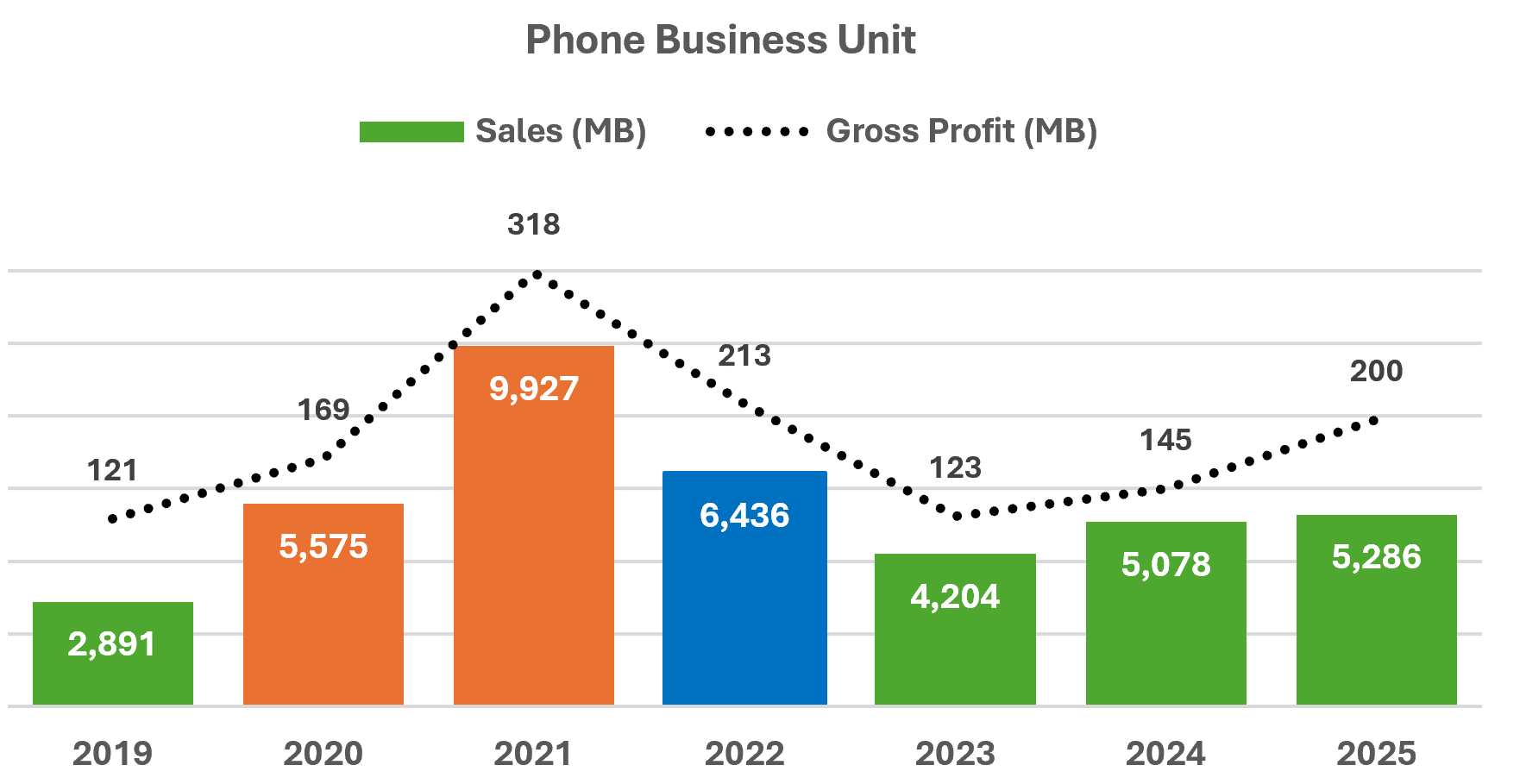
Sales and Gross Profit
The global smartphone market has been saturated since 2016, with unit sales declining year after year. However, the Company’s smartphone sales increased during the COVID-19 pandemic in 2020–2021, particularly in the budget segment, which was in high demand as these devices were widely used for government COVID-19 relief entitlement applications.
After the government support programs ended, sales began to decline during the early reopening period in 2022, compounded by shortages of chipsets used in the production of entry-level smartphones. As a result, the Company’s smartphone sales fell in 2022 and continued to decline through 2023, before recovering in 2024 in line with the broader market rebound.
In 2025, sales and profit increased slightly in line with overall market growth. The Company’s key smartphone brands are Xiaomi and Samsung.
Factors That May Affect Future Performance
Smartphones are a mature, saturated product category similar to personal computers. Purchases are largely replacement-driven, as new models typically offer limited differentiation from prior generations. However, as manufacturers increasingly embed AI capabilities into devices—making AI more accessible and easier for consumers to use—the handset market has begun to recover. Gartner forecasts that the smartphone market in 2026 will grow by 3% compared with 2025.
Downside factors that could impact this business unit include persistently high household debt, which continues to constrain household purchasing power. In addition, Thailand’s demographic structure—where the birth rate is lower than the death rate—results in a declining population. At the same time, Thailand’s economic growth outlook for 2026 is expected to remain modest, which may weigh on overall market demand.
Future Action Plan
In addition to ongoing operational efficiency improvements to reduce costs, the Company has expanded into the mobile phone accessories segment. These products can be bundled with smartphones and distributed through the same sales channels, creating additional business opportunities and incremental revenue.
Commercial Business Unit
Sales and Gross Profit
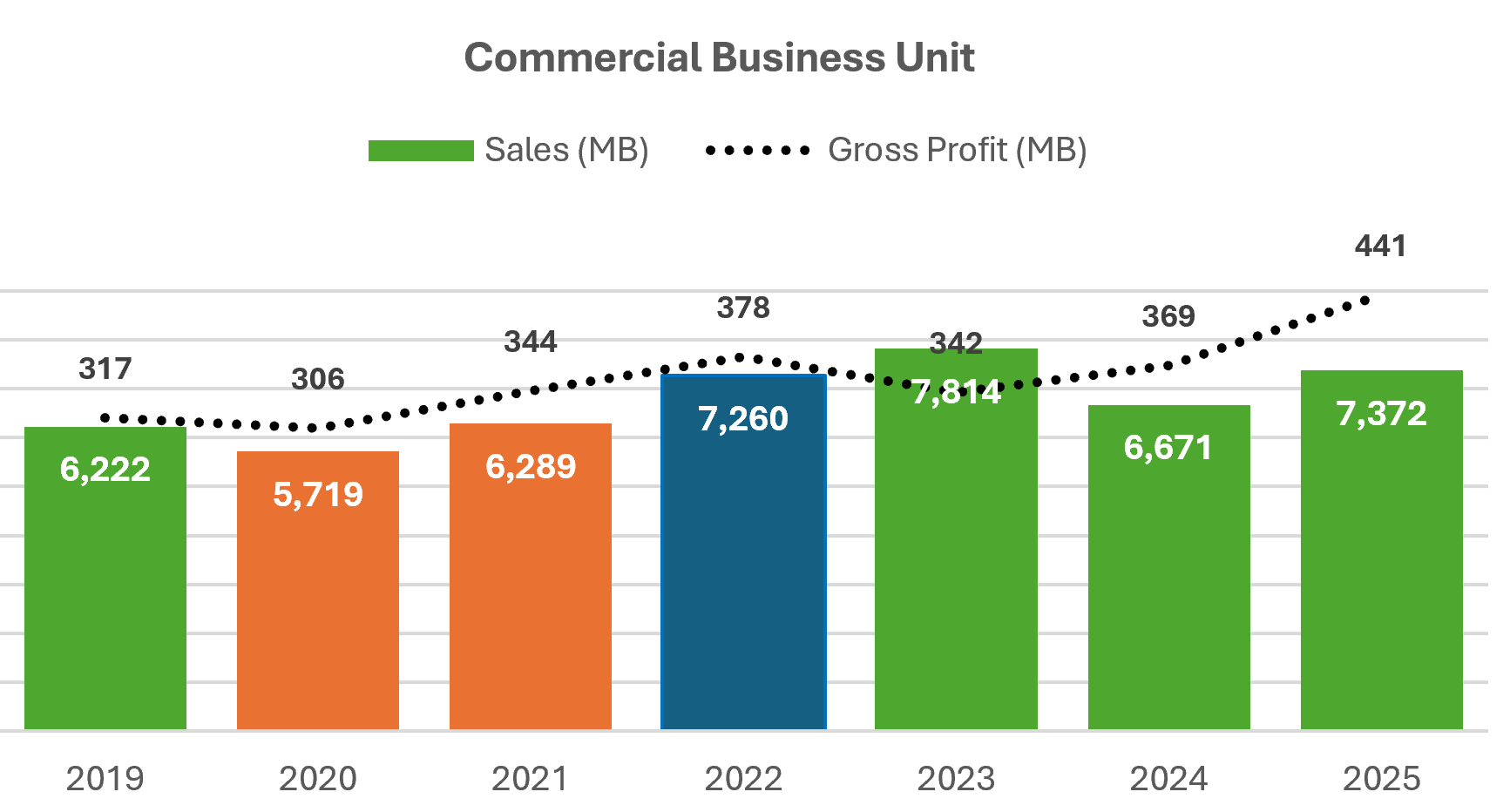
The key products in the Commercial Products segment are personal computers and servers. Demand for these products declined in the first year of the pandemic (Orange) due to supply shortages and lockdown measures that required employees to work from home. As a result, sales in this business unit fell by 8.1% in 2020, before recovering to pre-pandemic levels in 2021 as travel restrictions eased and employees began returning to the workplace.
This led many organizations to initiate PC replacement programs for end-of-life devices, driving sales growth in 2022 and continued growth through 2023. Sales then declined to 6,671 million Baht as the backlog of deferred replacement purchases was completed.
In 2025, sales returned to a normalized level of 7,372 million Baht, representing a 10.5% increase year-on-year, while gross profit rose by 19.5% compared with the prior year.
Factors That May Affect Future Performance
Under normal conditions, this mature product category typically grows in line with overall economic expansion. However, shortages of memory and storage devices may push up prices for computers and related equipment and lengthen delivery lead times. As a result, total sales in 2026 may not grow.
Future Action Plan
The Company plans to expand into the application of AI technologies within organizations and to broaden this business unit’s offerings by adding non-complex solution businesses. These initiatives are intended to generate incremental revenue and offset potential stagnation in personal computer sales in the future.
Value Added Business Unit
Sales and Gross Profit
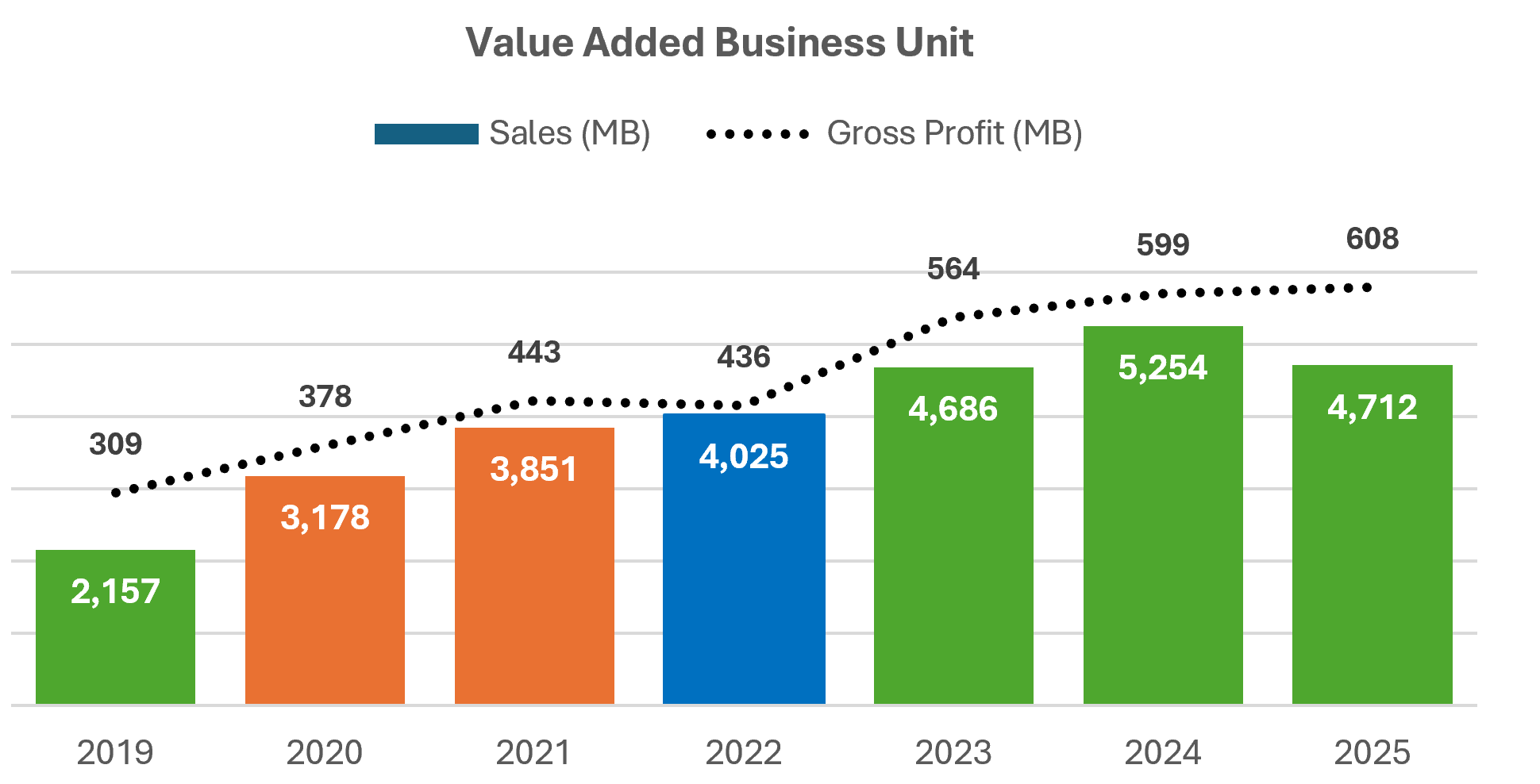
The key offerings in the Value-Added Products segment are Cyber Security solutions and Private Cloud Infrastructure. Demand for these solutions has increased due to the escalating severity of cyberattacks, as well as the need to upgrade data centers to improve stability and simplify management. Cyber Security products in particular have continued to grow in response to rising cyber threats, prompting organizations to increase investment to protect data and ensure business continuity.
In 2025, the Company recorded revenue of 4,712 million Baht from the Value-Added Business Unit, down 10.3% year-on-year, primarily due to a decline in Private Cloud Infrastructure sales. However, gross profit increased by 1.5%, supported by higher Cyber Security sales, which partially offset the lower profit contribution from Private Cloud. Since Cyber Security products are conducted under an agency model with net revenue recognition, reported sales increased only marginally and were insufficient to offset the decline in Private Cloud sales.
Factors That May Affect Future Performance
The Company believes that the Cyber Security product group can continue to grow, supported by the increasing frequency and severity of cyber threats. However, the Private Cloud business may be pressured by the rapid growth of Cloud computing, which continues to gain broader adoption. The expansion of public Cloud usage could negatively affect Private Cloud, as organizations that move to the Cloud typically reduce investment in Private Cloud systems, given that the two approaches can serve similar purposes. This may slow the growth of this business unit.
To address this shift, the Company plans to further expand into AI infrastructure in order to create new business opportunities and offset potential revenue declines from the Private Cloud business.
Others Business Unit
Sales and Gross Profit
New business units and smaller business units with lower revenue are consolidated and reported under Others Business Unit. In 2025, the Others Business Unit generated total revenue of 3,203 million Baht, up 6.7% year-on-year, and gross profit of 656 million Baht, up 9.3%. The top three business units within the Others Business Unit by revenue and gross profit are as follows:
1) Surveillance Business Unit
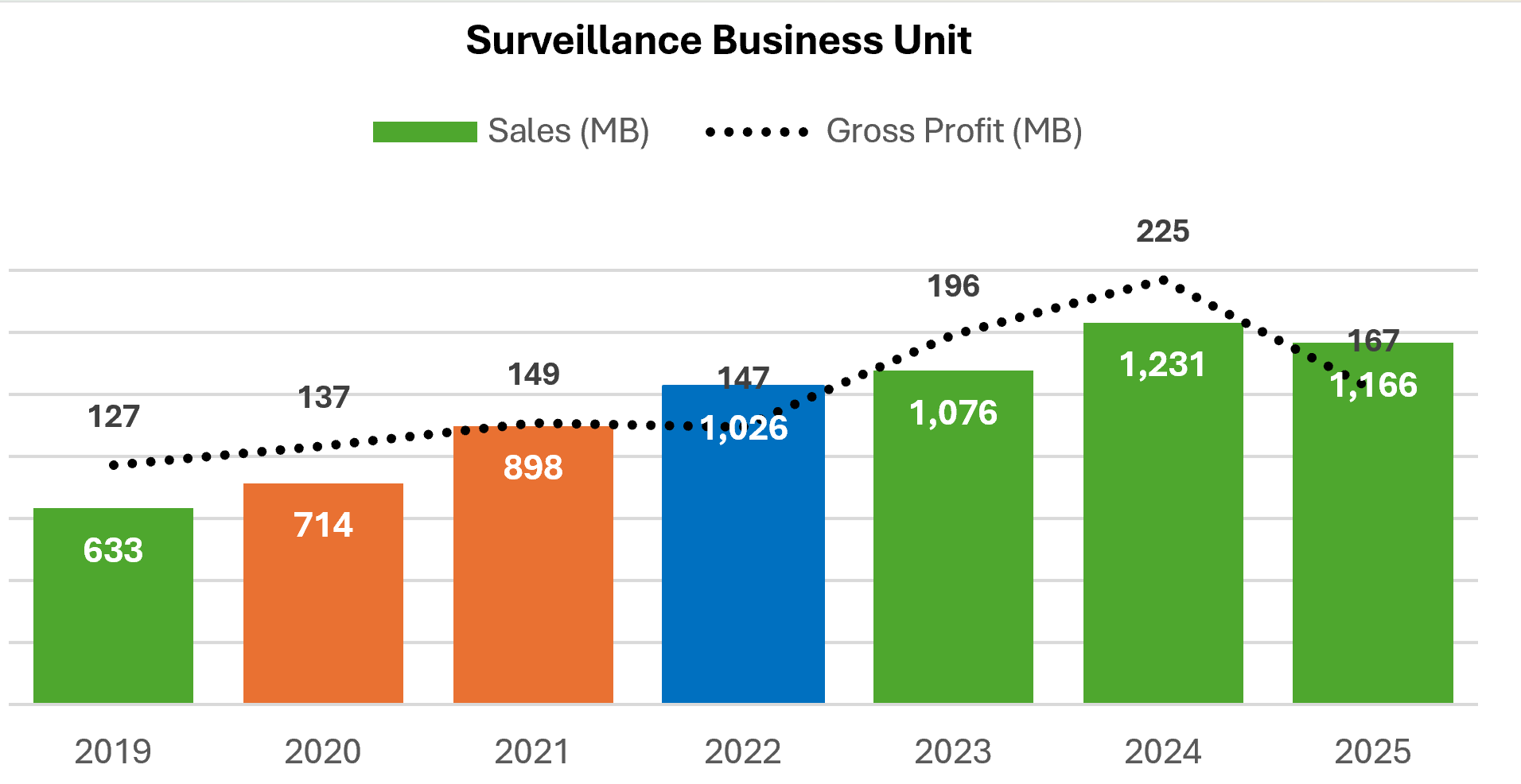
Most products in the Surveillance Business Unit include CCTV cameras, video recording systems, and access control systems. This market has shown steady growth in recent years. However, in 2025, the Company’s sales declined by 5.3% to 1,166 million Baht, and profit decreased by 25.7%, as the market began to mature and the value of large-scale projects fell significantly during the year. Given the increasing market saturation, the Company expects sales and profit for this business unit in 2026 to be broadly in line with 2025.
2) Subscription Business Unit
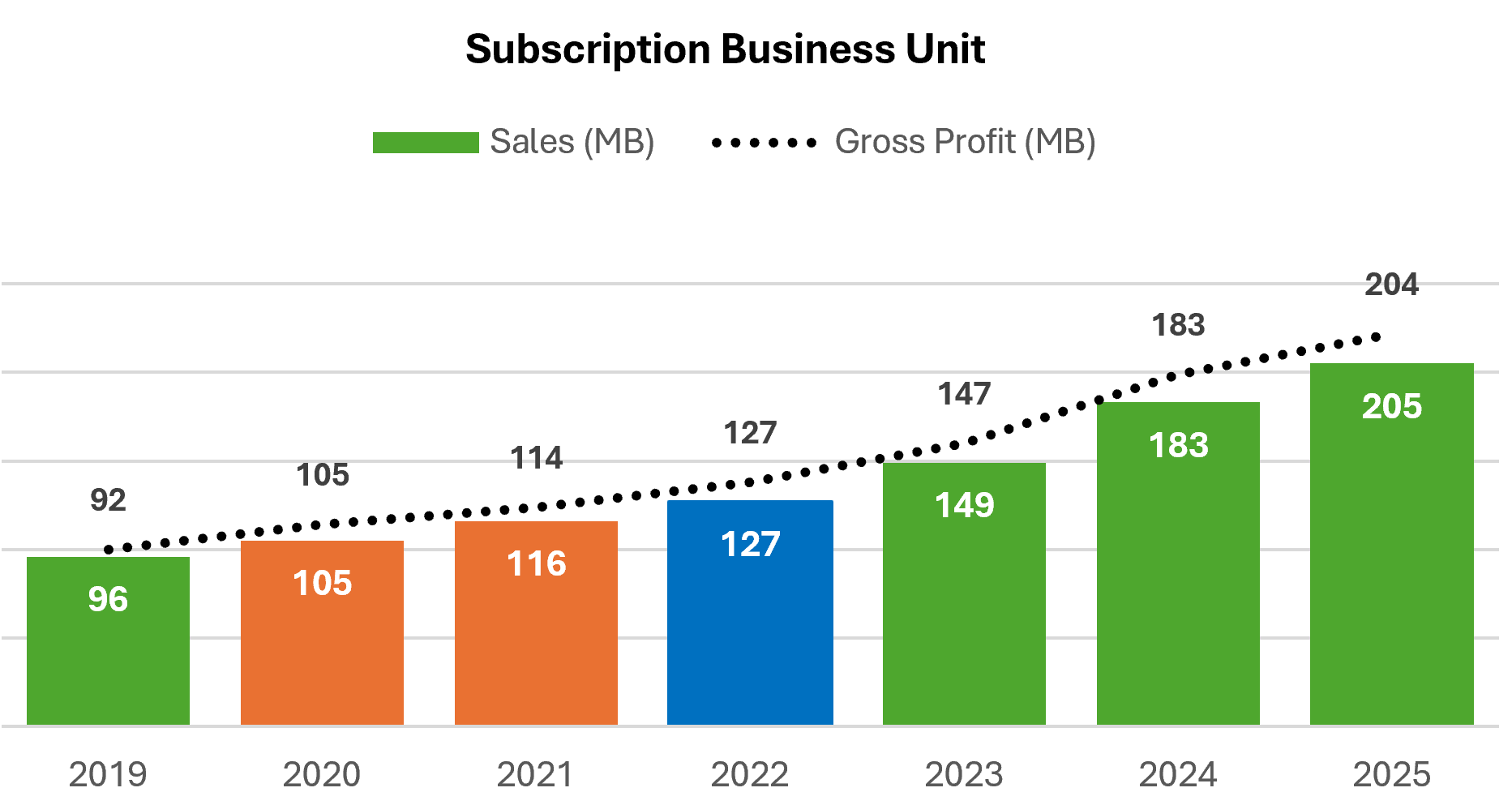
Most products in the Subscription Business Unit consist of annual service fees for cybersecurity solutions—such as firewalls and anti-virus software—that customers must renew each year as long as they continue using the products. Subscription revenue has continued to grow in line with the expanding customer base generated from new product sales, supporting the Company’s long-term revenue and profit stability. Under Thai Financial Reporting Standards (TFRS), this product group is classified as agency-based operations. Accordingly, the Company recognizes revenue only for the agency fee, calculated as sales net of the cost of goods or services. As a result, reported revenue from these sales is broadly comparable to gross profit. In 2025, the Company reported revenue of 205 million Baht, up 12.02% year-on-year, and gross profit of 204 million Baht, up 11.5%, reflecting continued growth in service demand and an expanding customer base.
3) Cloud Business Unit
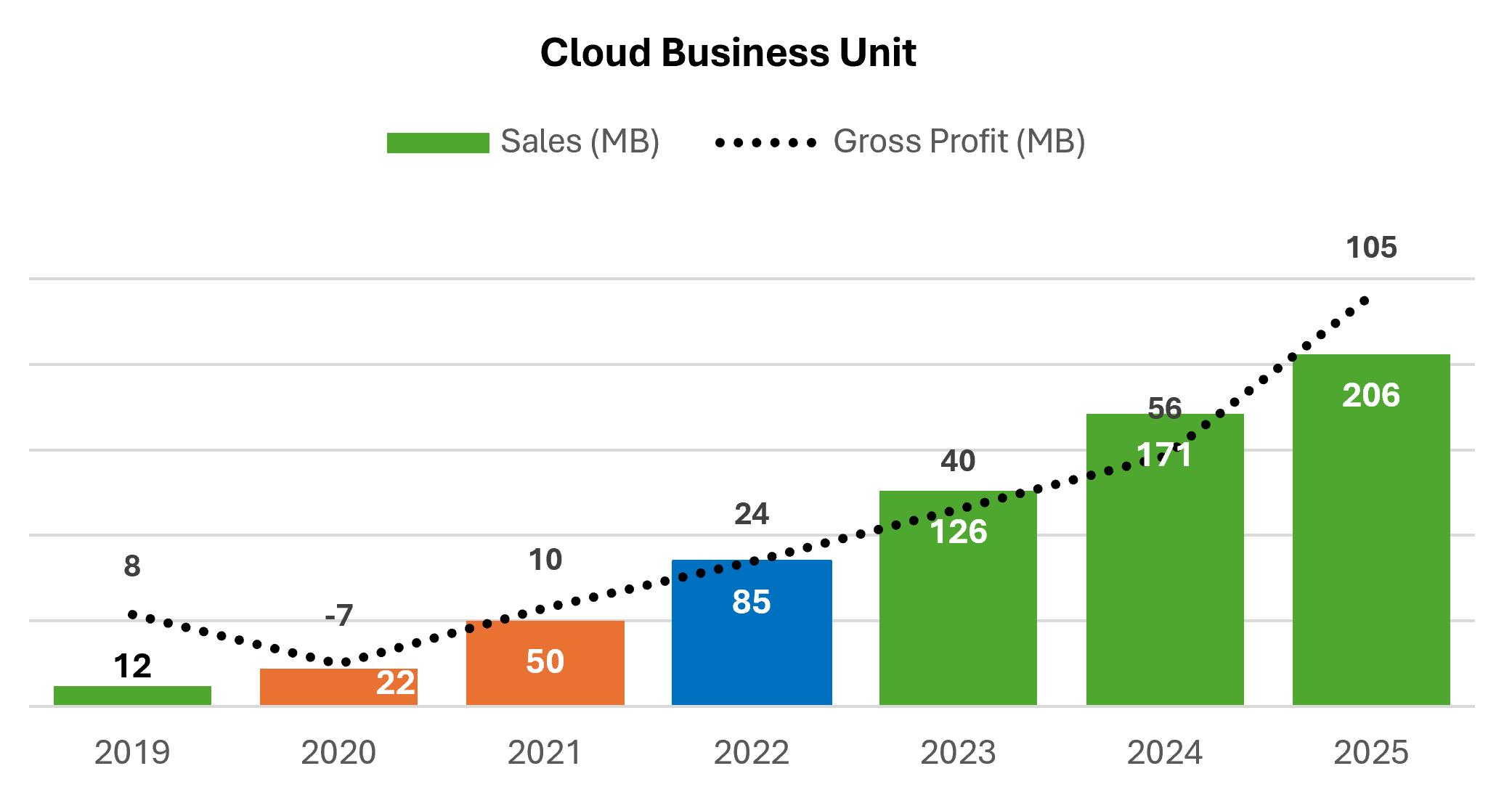
Products in the Cloud Business Unit comprise service fees charged to users of Cloud data centers—customers that use third-party technology infrastructure instead of investing in their own data center, or that use Cloud services to supplement their in-house data center. This approach provides greater benefits to users and reduces capital expenditure requirements, driving continued growth in Cloud adoption. Certain services in this category, such as AWS and Azure, are classified as agency (agent) arrangements under TFRS. Accordingly, the Company recognizes revenue only for the agency fee, calculated as sales net of the cost of goods or services. In 2025, the Company’s Cloud Business Unit recorded a 20.5% increase in revenue and an 87.5% increase in gross profit, reflecting rising demand for Cloud services and continued expansion of the customer base. Factors That May Affect Future Performance
To mitigate the risk of relying on core products that are entering a mature phase, the Company has invested in new technologies and early-stage businesses with strong growth potential. However, scaling these businesses requires significant additional investment in human resources, which also increases risk.
Key risks include the possibility that new products and businesses may not grow as projected, or that the Company may be unable to adapt and compete effectively in these new areas. This could result in lower-than-expected sales growth and/or an inability to achieve targeted profitability.
In 2025, the Company established a new business unit to develop the drone market and commenced operations as a distributor of DJI Enterprise drones. This is in addition to previously established new business units, including Energy, Software-as-a-Service, and Operational Technology.
Liquidity & Capital Adequacy
Summary of Important Financial Information
Asset Management Capability
Working Capital and Financial Position at the Beginning of 2025
Operations of 2025

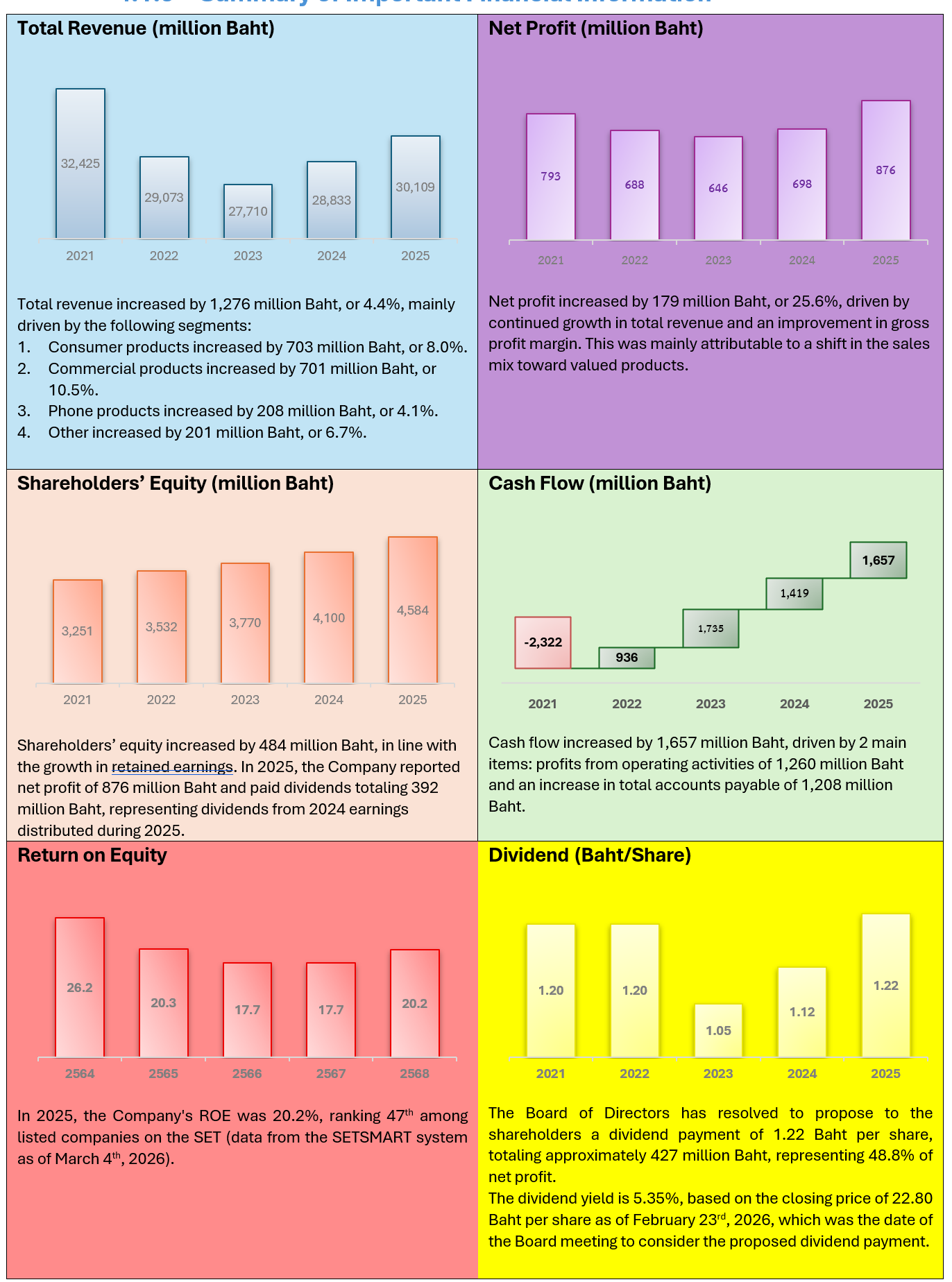
In 2025, the Company recorded total revenue of 30,109 million Baht, representing an increase of 4.4%. Net profit amounted to 876 million Baht, up 25.5%. Cash flow increased by 1,657 million Baht, or 16.7%.
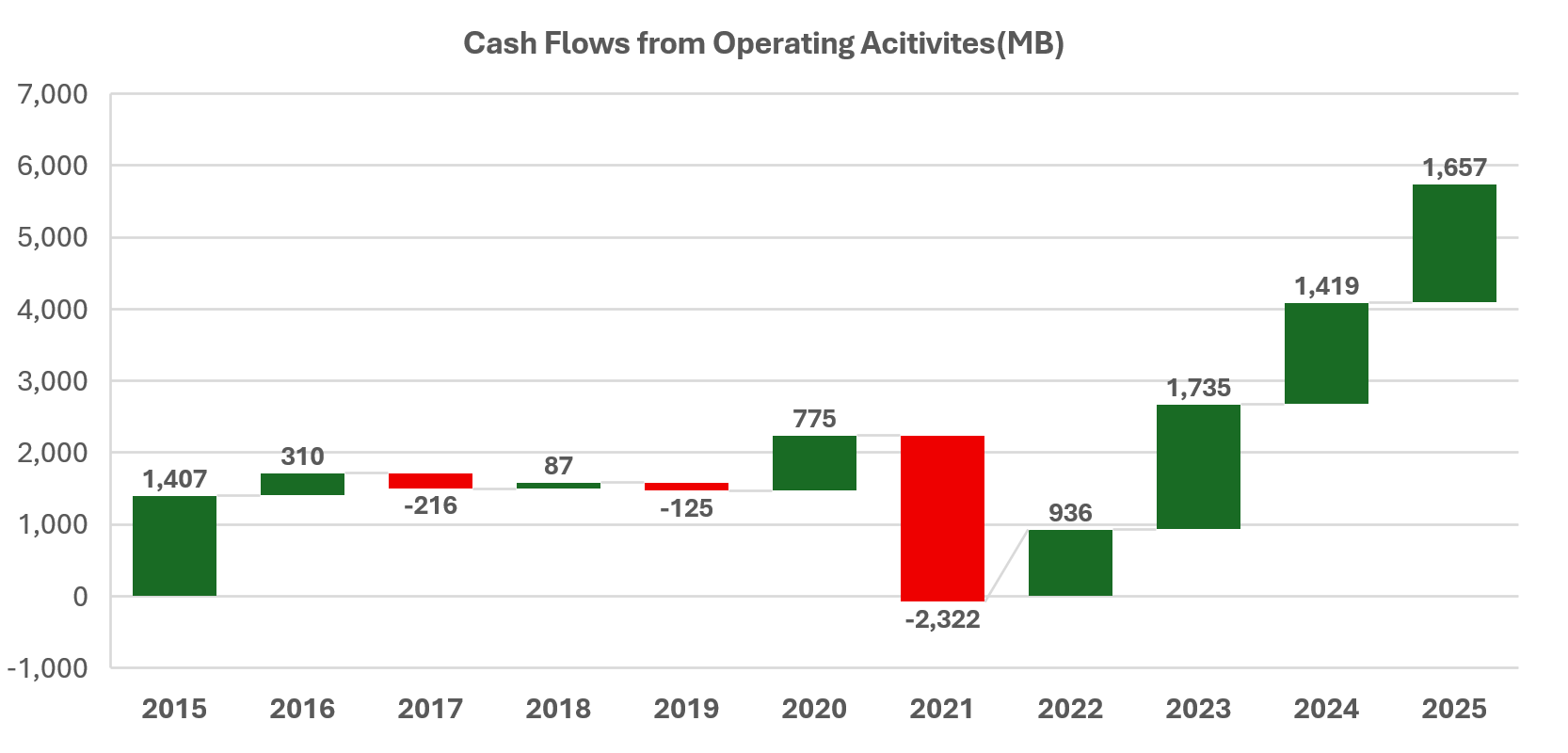
In 2025, the Company generated cash flow from operating activities of 1,657 million Baht, as illustrated in the chart showing operating cash flows from 2015 onward. In 2021, the second year of the COVID-19 crisis, the Company recorded a significantly negative operating cash flow of 2,322 million Baht. This was primarily due to a substantial increase in inventories, as goods ordered during the period of supply shortages arrived simultaneously.
Subsequently, the Company gradually reduced its inventory levels, enabling it to fully recover the cash outflow incurred in 2021. Over the period from 2015 to 2025, the Company has not only operated profitably but has also generated cumulative operating cash flow of more than 5,000 million Baht.
Working Capital and Financial Position at the end of 2025
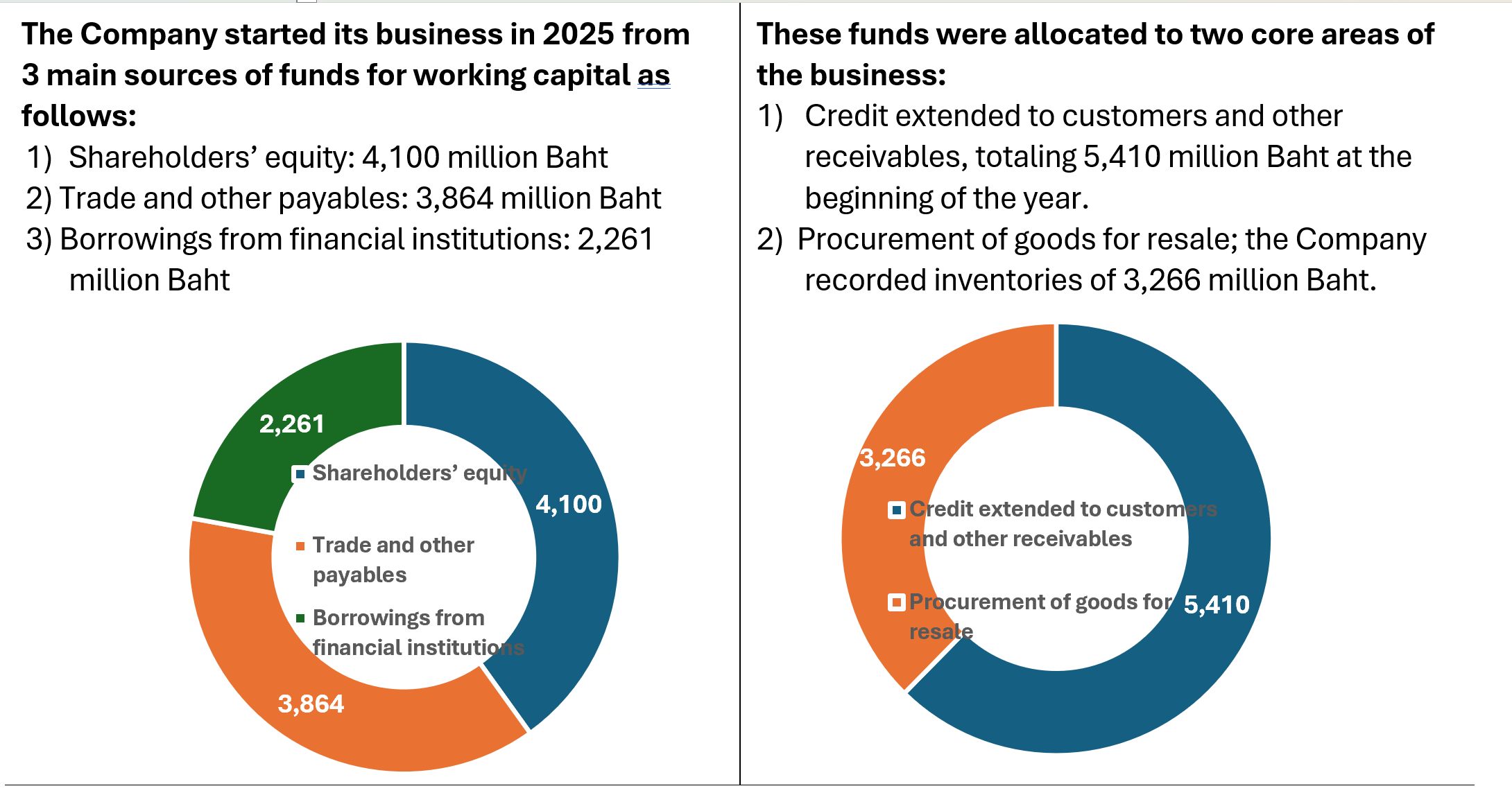
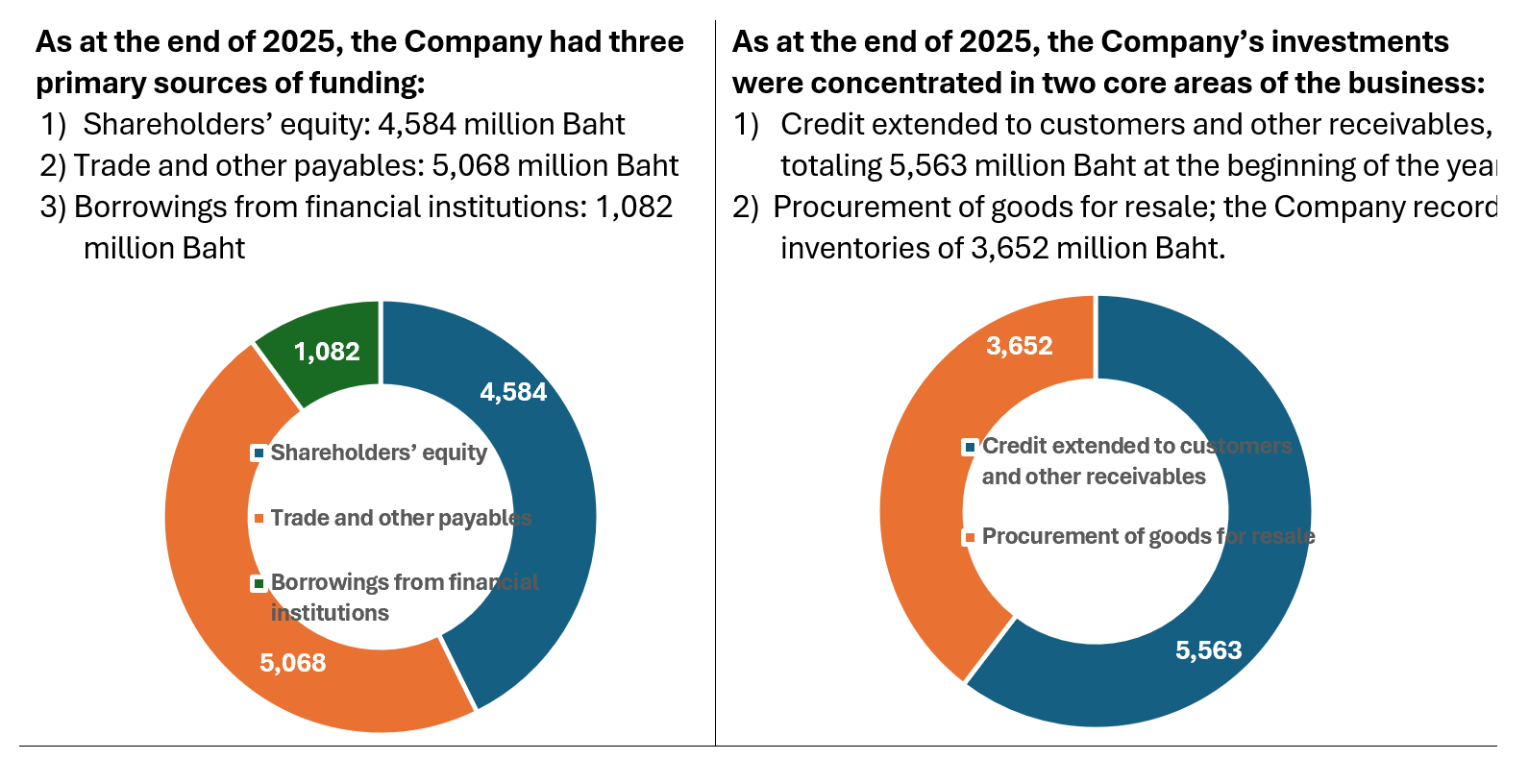
As of the end of 2025, the Company utilized its capital in two key areas. Total capital increased slightly from 8,803 million Baht at the beginning of the year to 9,215 million Baht at year-end. The Company also generated operating cash flow of 1,657 million Baht, reflecting continued business expansion. As a result, the Company was able to reduce loans from financial institutions from 2,261 million Baht to 1,082 million Baht by the end of the year.
The sources and uses of funds are illustrated in the chart below, highlighting a strengthened financial position. Shareholders’ equity increased to 4,584 million Baht, while the debt-to-equity ratio declined to only 0.24 times. This demonstrates effective financial management and the Company’s ability to reduce debt burdens and enhance long-term financial stability.
Use of Funds
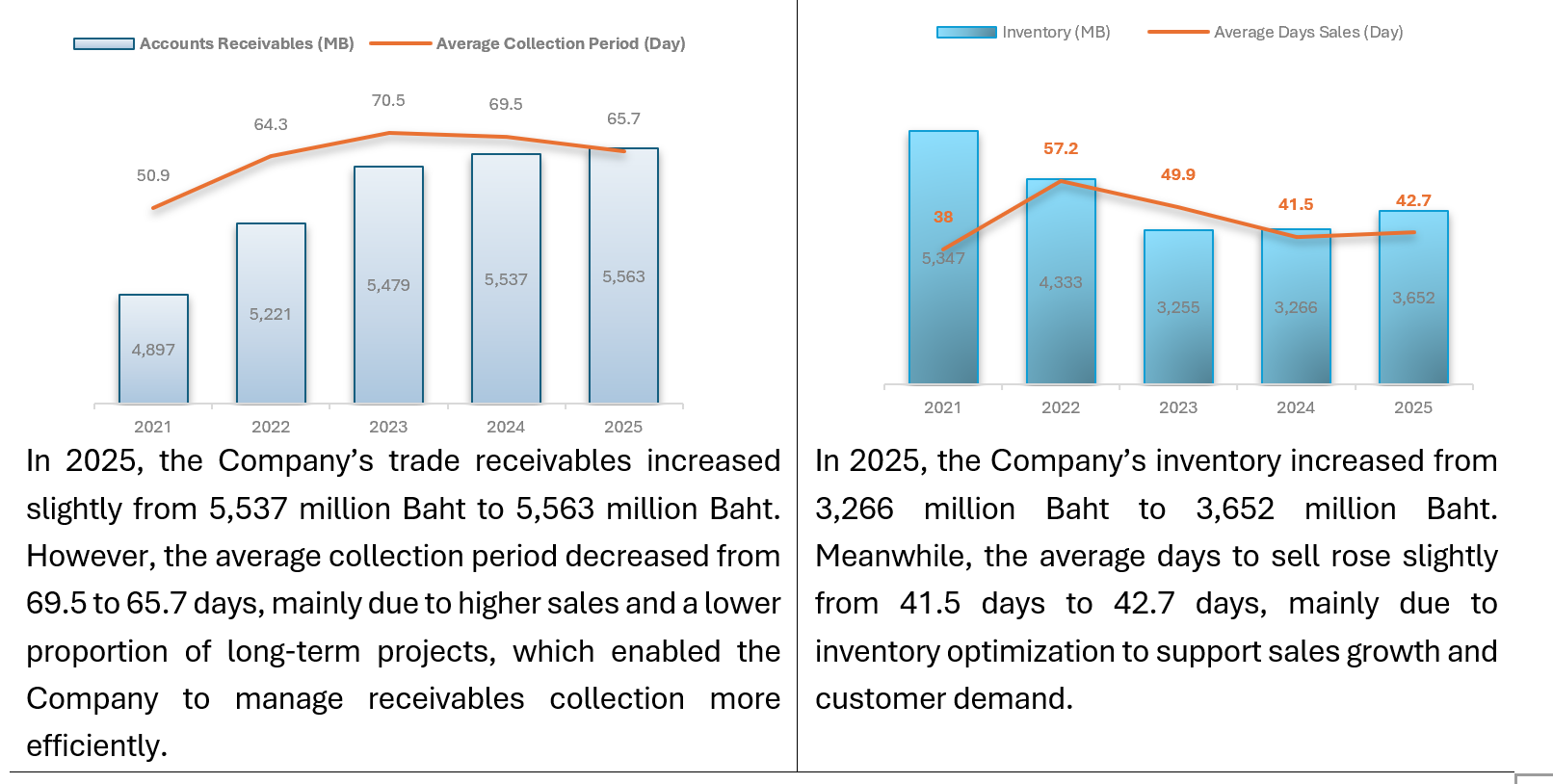
The Company’s capital utilization is primarily allocated to 2 key areas: 1) Accounts Receivable 2) Inventory. In 2025, the following changes were observed in these areas:
Source of Funds
The Company has 3 main sources of funds: 1) Shareholder’s equity, 2) Trade and other Accounts Payables, and 3) Loans from financial institutions. Changes in 2025 of all these sources are as follows:
Shareholders' Equity and Return on Equity
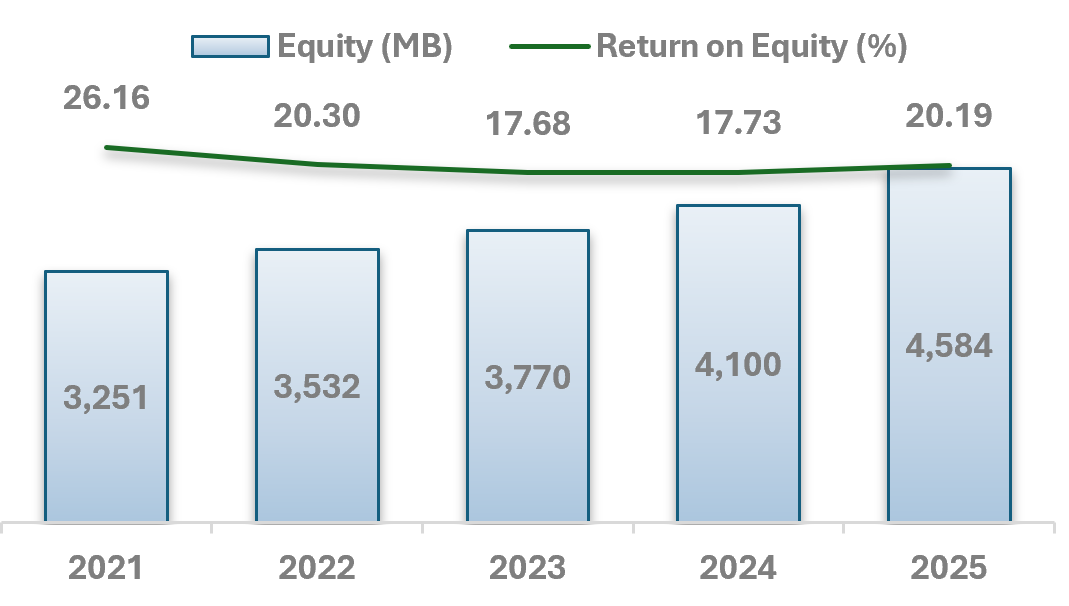
As of the end of 2025, the Company’s strong operating performance resulted in shareholders’ equity increasing to 4,584 million Baht, with an average return on equity (ROE) of 20.2%. This reflects the Company’s effective management of shareholders’ funds and its ability to consistently generate returns.
The growth in shareholders’ equity represents an important internal source of funding. It not only supports the expansion of business units across products, services, and personnel development—thereby creating sustainable competitive advantages—but also serves as a key foundation for strengthening long-term financial stability and flexibility.
Creditors and Average Payment Period
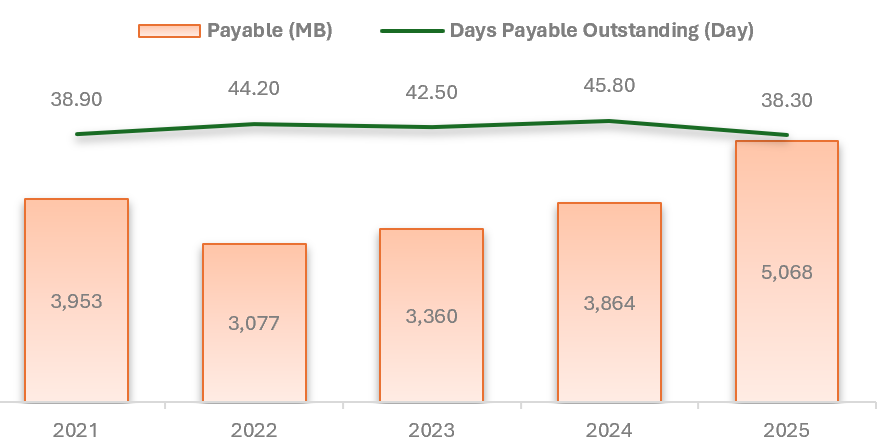
The Company has a policy of making payments to creditors on time and in accordance with agreed terms. This has strengthened creditor confidence and enabled the Company to maintain adequate credit facilities.
As of year-end 2025, the Company had total trade payables of 5,068 million Baht, with an average payment period of 38.3 days.
Loans and Debt-to-Equity Ratio
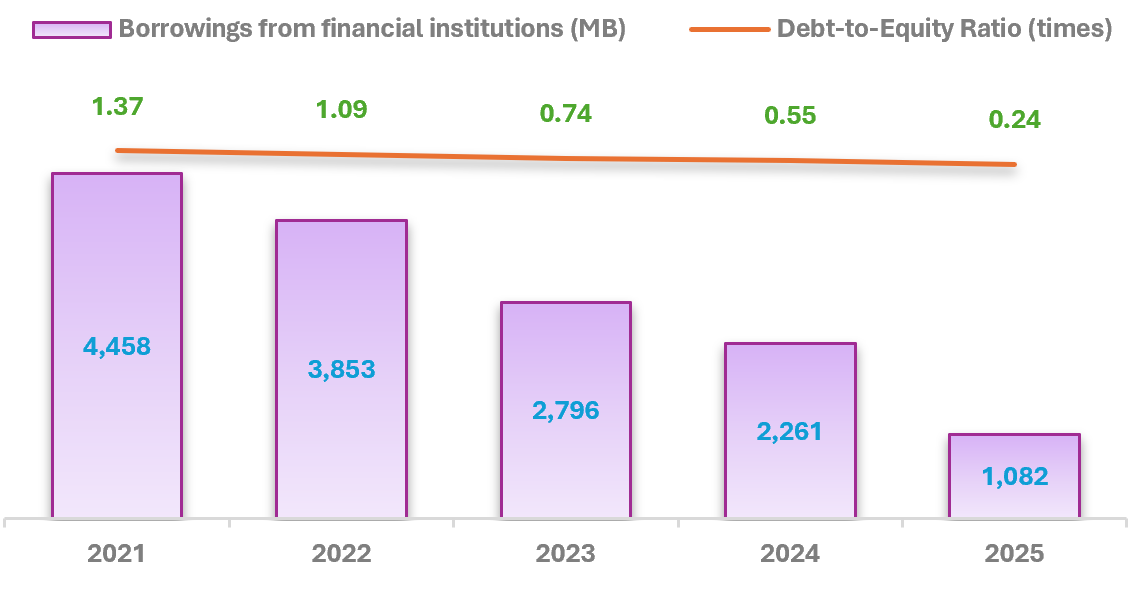
As of the end of 2025, the Company had outstanding borrowings of 1,082 million Baht, a decrease from the previous year, resulting in a total debt-to-equity ratio of 0.24 times.
The reduction in borrowings was driven by the profit generated in 2025, together with the continued growth in operating cash flow. This enhanced the Company’s liquidity, enabling faster debt repayment and more efficient capital structure management.
Cash Flow from Operating Acivities
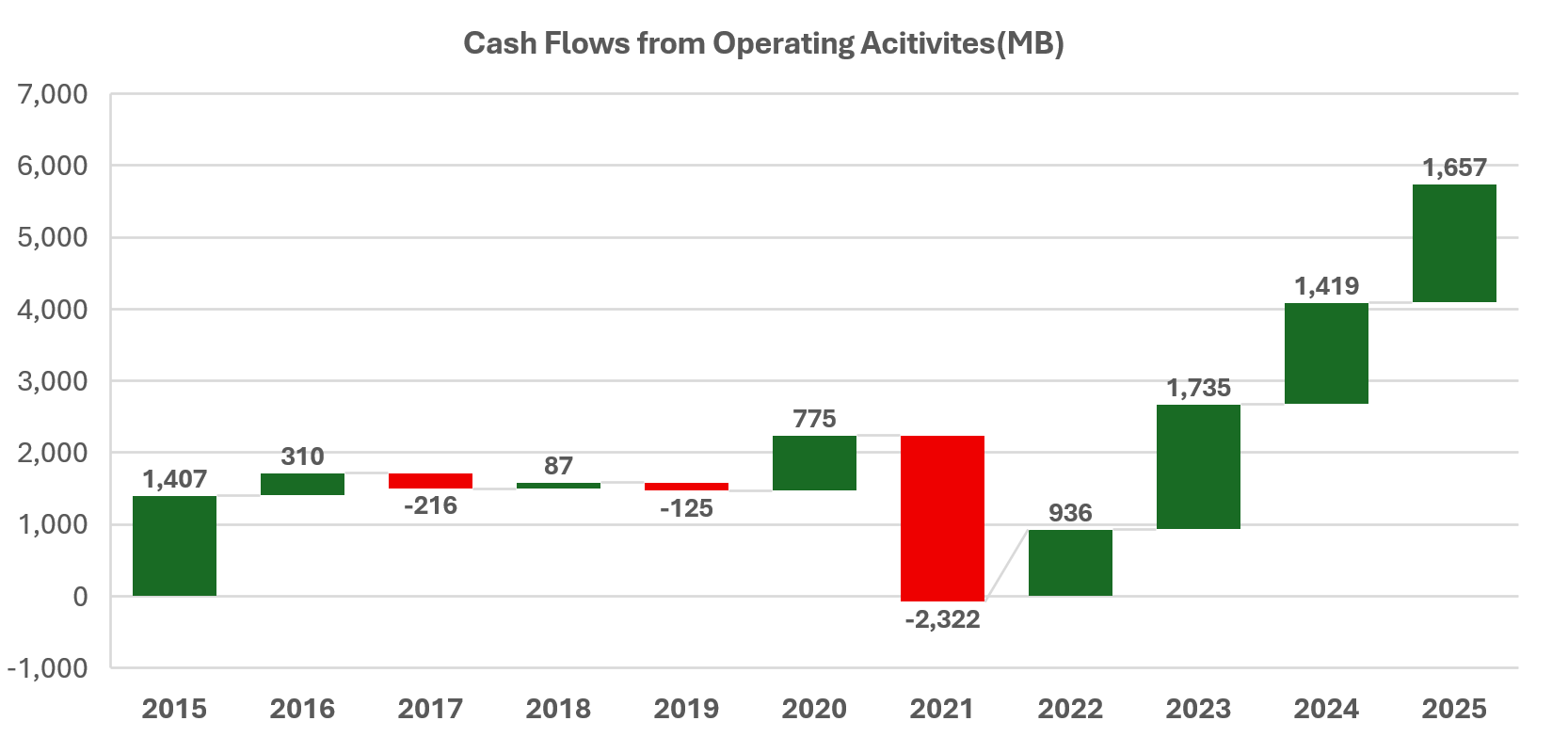
In 2025, the Company’s cash flow from operating activities increased by 1,657 million Baht compared to the previous year. The primary driver improved operating performance, with the Company continuing to generate profits from its core business operations. In addition, effective working capital management contributed to stronger liquidity, positioning the Company to better support its future business operations.
Dividend Payment
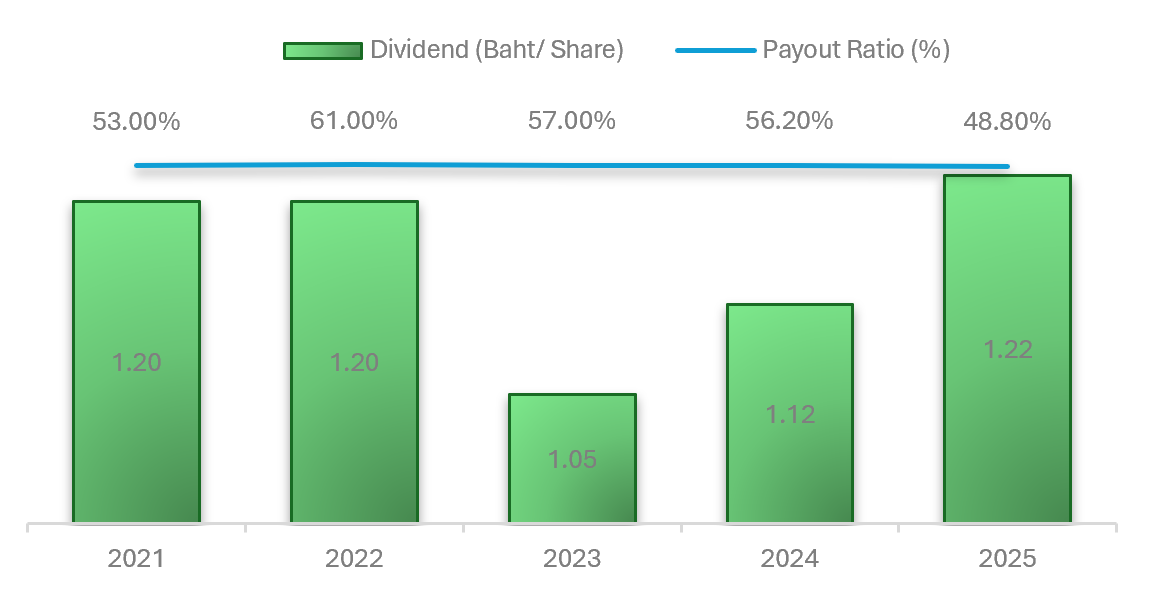
In 2025, the Company reported earnings per share of 2.50 Baht. The Board of Directors has resolved to propose an annual dividend payment for 2025 at 1.22 Baht per share, subject to approval at the 2026 Annual General Meeting of Shareholders.
If approved, the total dividend payment will amount to 427.2 million Baht, representing a dividend payout ratio of 48.8% of net profit and a dividend yield of 5.35%, based on the closing price of 22.80 Baht per share as of February 23rd, 2026, the date on which the Board approved the proposed dividend.
Debt Obligations & Off-Balance-Sheet Management
Contingent liabilities with non-related parties
As of December 31st, 2025, the Company had obligations with non-related parties as follows:
The Company has entered into forward foreign exchange contracts to hedge against exchange rate risk arising from the import or export of goods, amounting to 40.7 million US dollars, or the equivalent of 1,314 million Baht, and has also entered into foreign currency swap contracts to help reduce the risk from exchange rate fluctuations, amounting to 2.0 million US dollars, or the equivalent of 63.3 million Baht. Both types of contracts have a maturity of no more than one year.
The bank guarantees approximately 29.8 million Baht and 0.2 million US dollars, in respect of certain performance and bid bonds and others as required in the normal course of business of the Company.
Material & Related-Party Transactions
Material Transactions
The Company considers material transactions in accordance with the Securities and Exchange Act and the regulations of the SEC. This includes transaction size calculation, disclosure requirements, and other relevant procedures.
In 2025, the Company did not engage in any transactions classified as Material Transactions.
Related Party Transactions
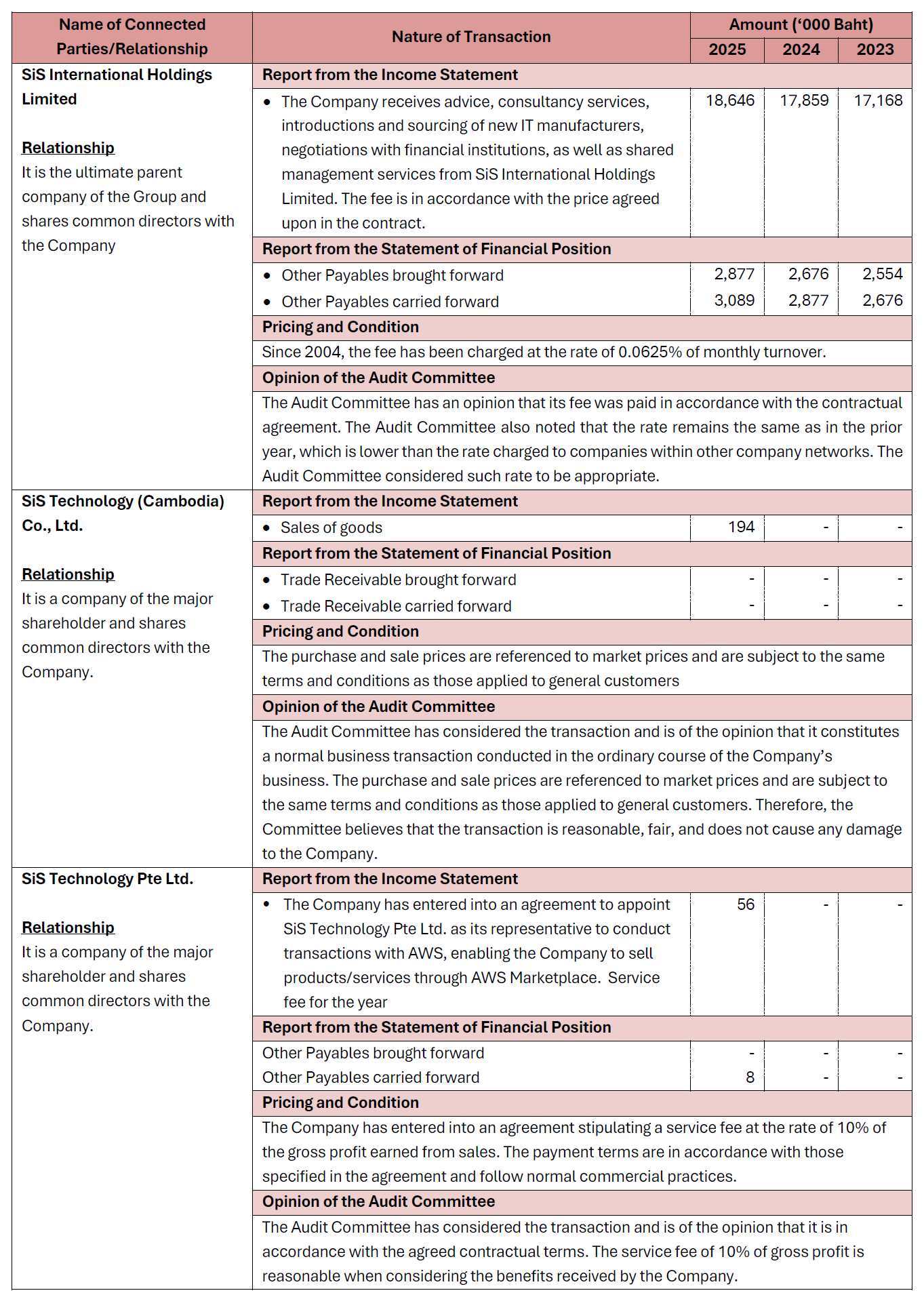
The Company considers related-party transactions in compliance with the Securities and Exchange Act and the regulations of the SEC. This process includes transaction size calculation, disclosure requirements, and other relevant procedures. Individuals with potential conflicts of interest or vested interests in a transaction are not permitted to vote on the matter.
In 2025, the Company has engaged in related-party transactions as follows.
Debt Securities with Financial Ratio Requirements
Debt Securities with Financial Ratio Requirements Issued?
No
Factors That May Affect Financial Condition
Factors or Incidents That May Materially Affect Financial Condition
Theres are various factors and events that may significantly affect the financial position in the future as follows:
Growing Technology Markets
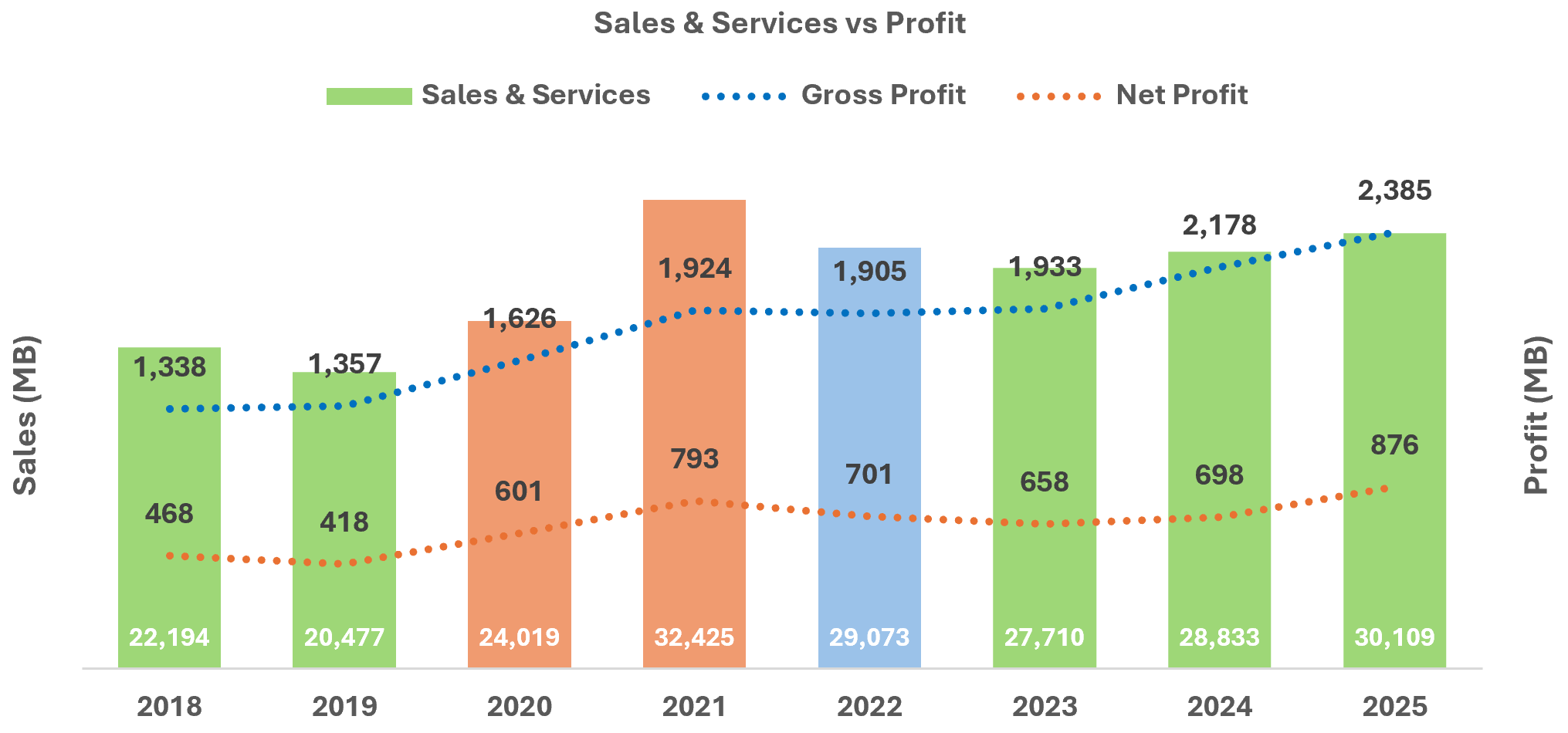
In the two years prior to the COVID-19 pandemic (2018–2019), the Company generated average annual revenue of 21,335 million Baht, with average annual gross profit of 1,348 million Baht and average annual net profit of 446 million Baht.
In the second year of the pandemic (2021), the Company’s revenue and profitability increased significantly. Revenue reached a peak of 32,425 million Baht, with gross profit of 1,924 million Baht and net profit of 793 million Baht. This growth was driven by heightened demand for technology to address limitations on travel and business operations. The Company believes this period accelerated widespread adoption of digital technology among consumers and businesses, establishing a key foundation for technology use in daily life and business activities.
In 2025, the Company recorded its second consecutive year of growth in both revenue and profit. Total revenue increased by 4.4%, while net profit rose by 25.6%. Key drivers included continued familiarity and proficiency in the use of technology following the pandemic period, which has kept demand at elevated levels and generated benefits for both end users and participants in the technology industry.
Recurring Revenue Business
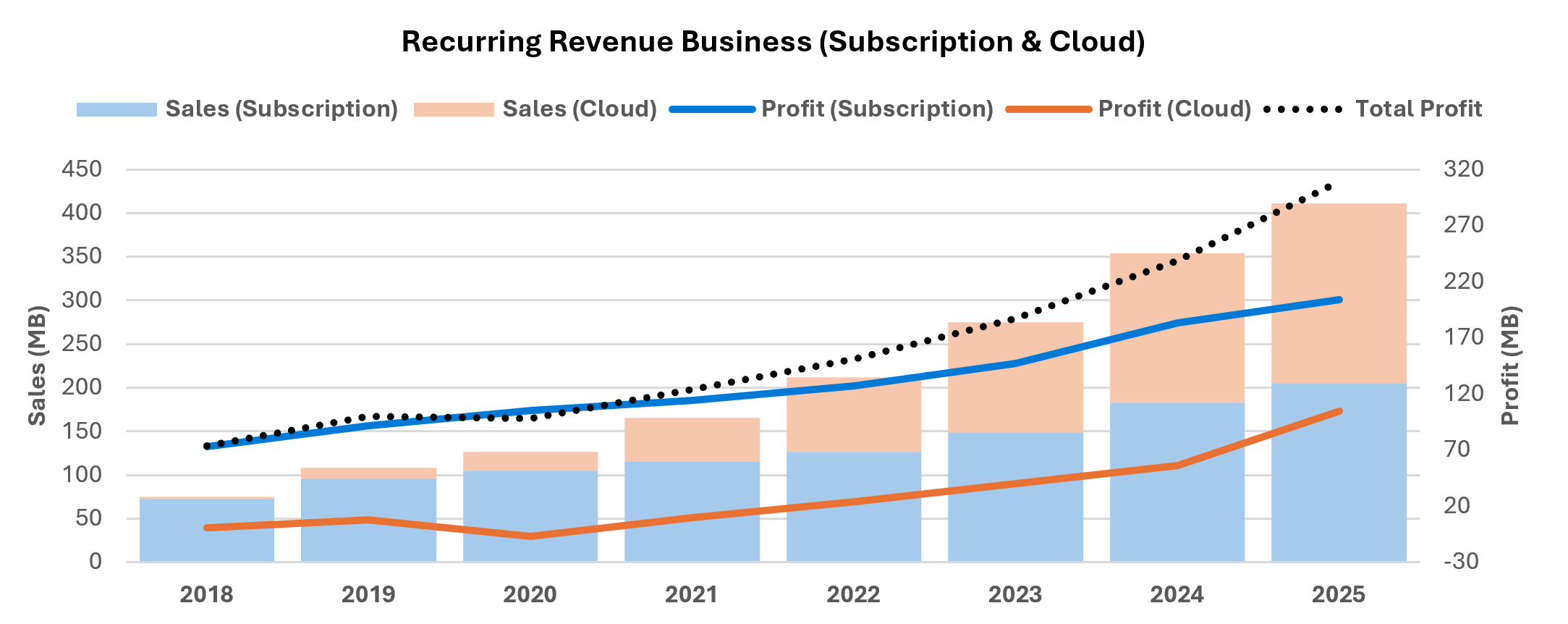
The Company has two business units with recurring revenue characteristics: Cloud and Subscription. Once deployed, customers typically do not switch providers due to the risks and complexities associated with migration. Conversely, when the solutions perform well, usage tends to expand over time.
Accordingly, both revenue and gross profit from these businesses have continued to grow at a strong pace. In 2025, profit from this segment amounted to 309.8 million Baht, representing a 29.4% year-on-year increase.
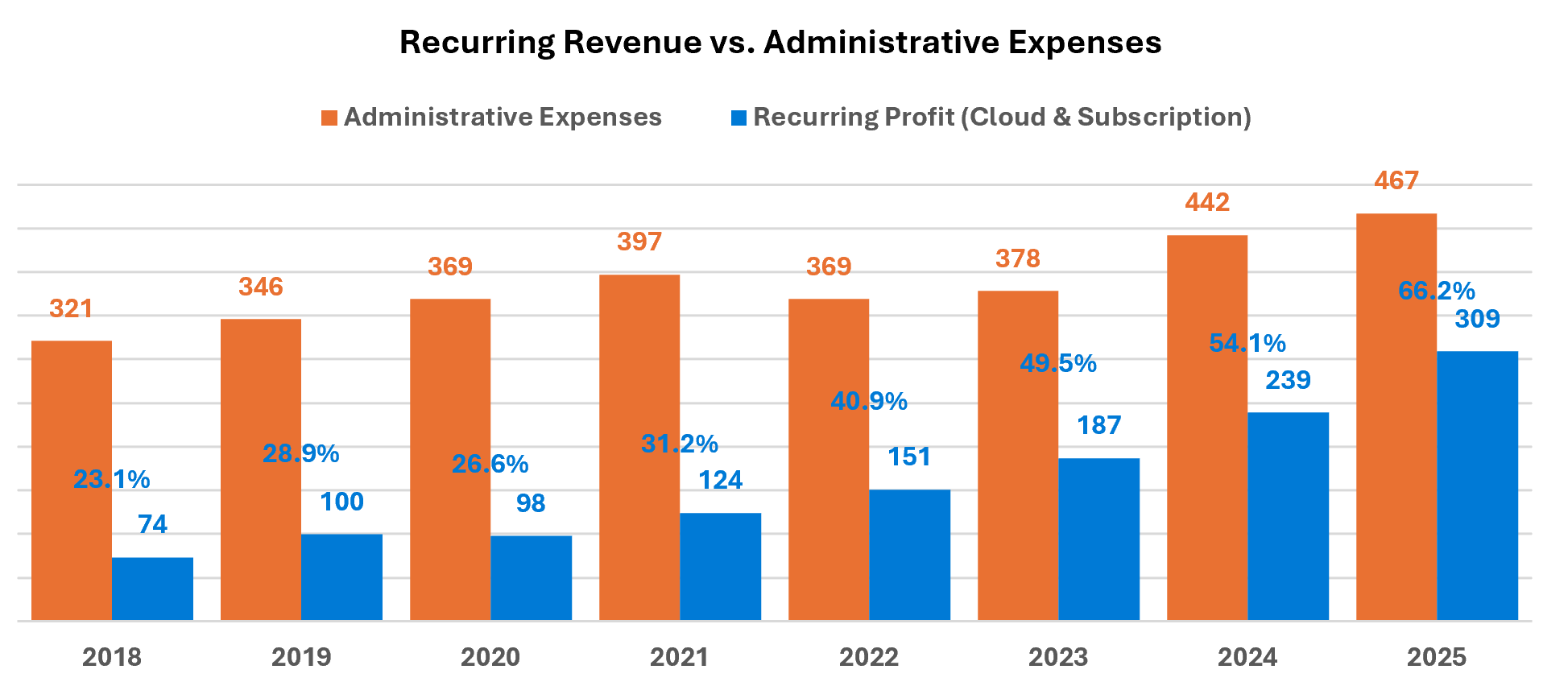
One of the Company’s key expense items is administrative expenses, which amounted to 467 million Baht in 2025 and are largely fixed costs. If recurring profits from the Cloud and Subscription Business Units can fully cover these expenses, the Company’s earnings and financial resilience will improve.
The ratio of recurring profit to administrative expenses has gradually increased from 23.1% in 2018 to 66.2% in 2025. At this rate of progress, recurring profit is expected to increase to a level equal to administrative expenses within the next four years.