

CG Policy · 2025
In this section7 topics
Corporate Governance Policy
Has a Corporate Governance Policy
Yes
Policy Description
The Corporate Governance and Sustainability Committee emphasizes the importance and commitment to conducting business in accordance with principles of good corporate governance and Codes of Conduct, as outlined in the established framework and policies. This ensures that the Company's corporate governance activities are efficient and effective, instilling confidence in shareholders and stakeholders alike. The Company is dedicated to aligning the Company's operations with corporate social responsibility and environmental sustainability under ethical guidelines. The Company endorses good corporate governance practices by refraining from supporting activities that infringe intellectual property rights and ensuring robust management systems to prevent fraud and corruption. Additionally, the Company integrates the principles of sufficiency economy to drive sustainable business success. It is endeavor to promote a culture where all employees consistently adhere to principles of good corporate governance, thereby ensuring the Company's sustainably success.
Overview of Corporate Governance Policy and Guidelines
“Corporate governance” refers to the governance relationships, including the mechanisms and measures used to ensure that decision-making within the organization aligns with its objectives. This includes setting the company’s objectives, key goals, strategies, and policies; reviewing and approving business plans and budgets; and monitoring, evaluating, and overseeing performance reporting.
The Company recognizes the importance of good corporate governance and has therefore established an effective governance structure, mechanisms, and systems covering oversight, monitoring, and performance evaluation. The Company adheres to and complies with the Principles of Good Corporate Governance for Listed Companies (CG Code) issued by the Securities and Exchange Commission (SEC) and the SET as its primary operating guideline, and implements practices, as appropriate, in line with the OECD’s internationally recognized corporate governance standards.
In this regard, the Company upholds five fundamental principles of good corporate governance, as follows:
Integrity: Manages the operations with honesty, integrity, trustworthiness, and adherence to correctness.
Fairness: Actions towards stakeholders of the organization are conducted equitably and justly.
Transparency: Conducts the operations with clear and open disclosure of information to relevant stakeholders, allowing for scrutiny and verification.
Responsibility: Fulfill duties and responsibilities with intelligence and full capability, aiming for successful outcomes and continuous improvement.
Accountability: Accepting and taking responsibility for the consequences of actions, orders, assignments, and decisions based on their roles and responsibilities. This includes the ability to explain and justify decisions made.
In addition, the Company also adopts guidelines from the ASEAN CG Scorecard and criteria from the Thai Listed Company Corporate Governance Survey by the Thai IOD. These policies and guidelines are established by the Corporate Governance and Sustainability Committee and are presented to the Board of Directors for consideration on a yearly basis.
Policy & Practices — Board of Directors
Has Policy & Guidelines for the Board
Yes
Board Guidelines
| Guideline | Other — Please Specify | Detail |
|---|---|---|
| Nomination of Directors | The Company has established a systematic and transparent policy for the nomination and appointment of directors, as set out in the Charter of the Board of Director and reviewed periodically to ensure alignment with good corporate governance principles. The nomination of new directors includes disclosure of the following key matters: 1) Sources for Director Candidates 2) Criteria for Nomination of New Directors
(3) Process for Nomination of New Directors
| |
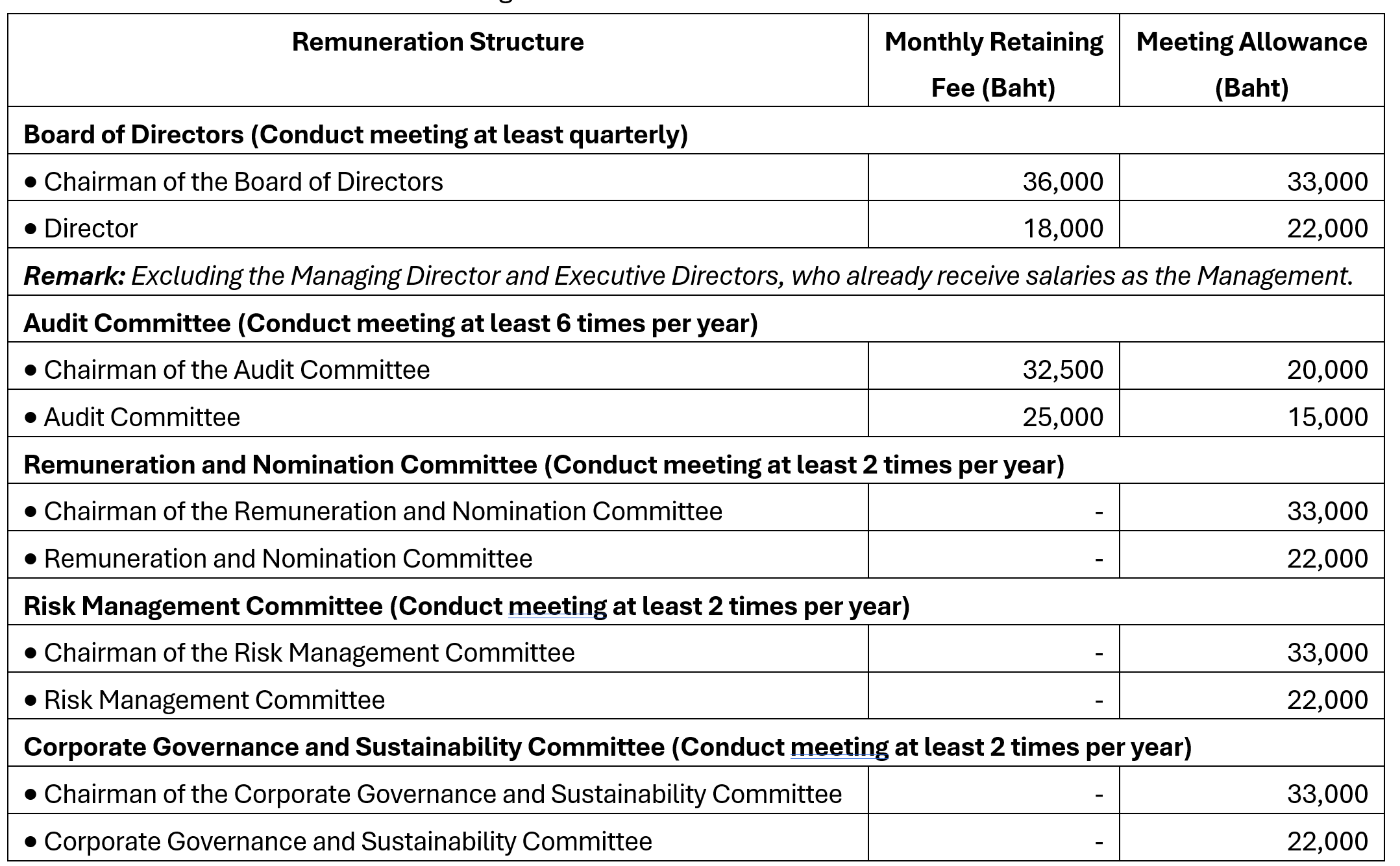
| Determination of Director Remuneration | 1) Monetary Remuneration The Remuneration and Nomination Committee is responsible for reviewing and proposing director remuneration, taking into account their responsibilities, workload, and an appropriate remuneration structure aligned with industry standards. Director remuneration is categorized as follows:
Additionally, the Company considers the following: Annual Special Reward: Paid once a year based on performance, as determined by the Remuneration and Nomination Committee in accordance with established criteria. This reward is granted to all directors, except executive directors and non-executive directors. EJIP Stock Purchase Contribution: Provided to executive directors under the approved conditions applicable to the Management. 2) Other Remuneration | |
| Independence of the Board of Directors from the Management | The Company places great importance on the independence of the Board of Directors to ensure transparent and effective corporate governance. The board's composition adheres to the guidelines set by the SEC, requiring that at least one-third of the total board members, and no fewer than 3, be independent directors. Additionally, the Audit Committee must have at least 3 members. To maintain a balance of power, the Company has separated the roles of Chairman and the Managing Director:
The Board of Directors collectively participates in policy-making, budgeting, and operational planning. To uphold neutrality and transparency, directors with conflicts of interest in specific matters must abstain from voting on related issues. The Company has established clear distinctions between the roles of the Board of Directors and the Management. The Board of Directors is responsible for corporate governance, policy formulation, and strategic planning, while the Management ensures operational execution, investment oversight, and business administration in alignment with these policies. Furthermore, the Company facilitates ongoing communication of strategies, objectives, performance, and operational direction to the Management and employees through monthly meetings. It also has a leadership development and succession plan for the Management and senior Management to ensure seamless management continuity in the event of key leadership changes. | |
| Director Development | The Company is committed to promoting and supporting the continuous development of its directors to ensure they perform their duties effectively. This includes training programs from reputable institutions such as the Thai IOD, the SET, the Federation of Accounting Professions under the Royal Patronage (FAP), and other relevant courses aligned with good corporate governance principles. | |
| Board Performance Evaluation | To enable the Board of Directors to review and assess its own performance, the Company’s Board and its sub-committees conduct annual performance evaluations. In 2025, the Company adopted the Thai IOD’s Board Self Check assessment as a guideline to further enhance and improve their effectiveness. The evaluation covers key dimensions, including structure and qualifications; roles, duties, and responsibilities; meeting effectiveness; stakeholder engagement; training and required resources; and reporting. The assessment is conducted at three levels, as follows:
The Company Secretary coordinates and consolidates the evaluation results from the Thai IOD before forwarding them to the Secretary to the Remuneration and Nomination Committee for submission to the Committee to consider and determine guidelines for enhancing the Board’s effectiveness. Thereafter, the Company Secretary processes and records the information and makes the relevant disclosures in accordance with the prescribed procedures. | |
| Corporate Governance of Subsidiaries and Associated Companies | The Company has established a governance policy for its subsidiaries and affiliates to ensure that their operations are conducted efficiently, transparently, and in alignment with good corporate governance principles. The key governance practices are as follows: 1) Appointment of Directors and Management
2) Internal Control Oversight
3) Disclosure and Key Transactions
Since the Company's affiliates has ceased operations and is under consideration for liquidation, the Company has not appointed additional board members for oversight. In 2025, the governance of subsidiaries and associates has been carried out in accordance with the established policies and practices. | |
| Other guidelines regarding the board of directors | Qualification of the Directors | The Company has defined the qualifications of its directors in the Board of Directors’ Charter, which is regularly reviewed. The qualifications are as follows:
|
| Other guidelines regarding the board of directors | Charter of the Board of Directors and its Sub-Committees | The Board of Directors represents shareholders in driving the organization forward, playing a key role in setting strategies, policies, and overseeing business operations with responsibility, transparency, and fairness to all stakeholders. This is conducted in accordance with good corporate governance principles to maximize the benefits for the Company and its shareholders while promoting sustainable growth alongside society. To ensure proper governance, the Company has established the Charter of the Board of Directors and its subcommittee as guidelines for directors to perform their duties effectively. These charters are reviewed regularly and published on the Company’s website, as well as in Attachment no.10, covering key topics, including:
|
| Other guidelines regarding the board of directors | Roles of the Chairman of the Bord of Directors | The Chairman of the Board of Directors, as the individual responsible for setting the strategic direction, with approval from the Board of Directors, has the following roles and responsibilities:
|
| Other guidelines regarding the board of directors | Roles of the Managing Director | As the leader of the Management, the Managing Director is responsible for overseeing the Company's operations in alignment with the policies approved by the Board of Directors. The key responsibilities include:
|
| Other guidelines regarding the board of directors | Board of Directors' Authority of Approval | The Board of Directors has the authority to approve various company matters within the scope of its responsibilities as defined by law, the Company’s Article of Association, the Charter of the Board of Directors, and resolutions of the shareholders' meeting. This includes setting and reviewing the Company’s vision, mission, operational strategies, master plans, risk management policies, annual budget and business plans, and performance targets. The Board of Directors is also responsible for monitoring and evaluating performance to ensure alignment with established plans, overseeing capital expenditures, material connected transactions, mergers and acquisitions, business separations, joint ventures, and the appointment of directors, the Management, or other key positions in subsidiaries. Additionally, the Board of Directors has the authority to delegate decision-making powers as necessary. |
| Other guidelines regarding the board of directors | Directorship Positions in Other Companies | The Company has established a policy regarding the holding of positions in other companies by the directors and the Managing Director, in alignment with the best practices set forth or recommended by regulatory authorities. Each director is allowed to hold positions in no more than 5 listed companies in total, while the Managing Director may hold positions in no more than 2 other listed companies. Additionally, for the Managing Director and senior Management to assume directorships in other companies, prior approval from the Board of Directors is required. |
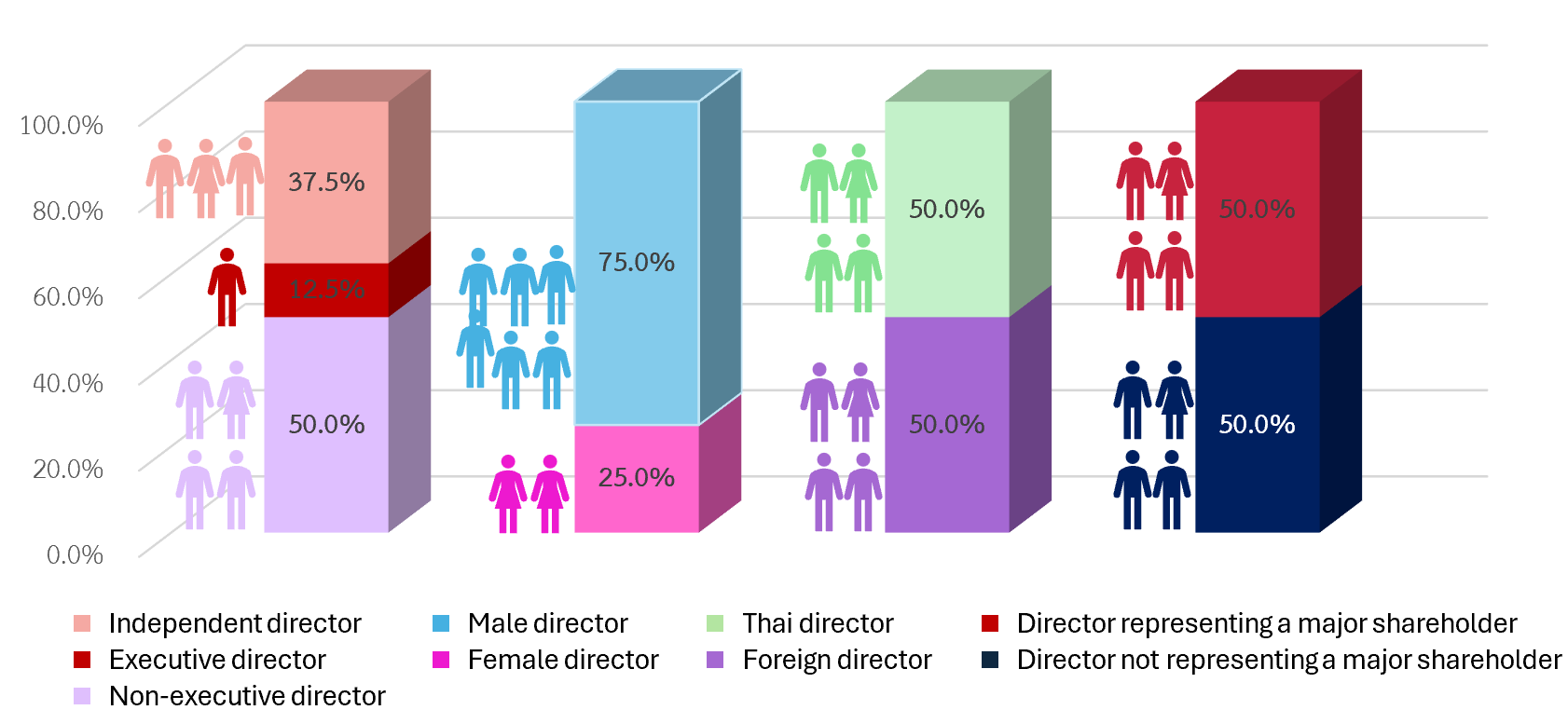
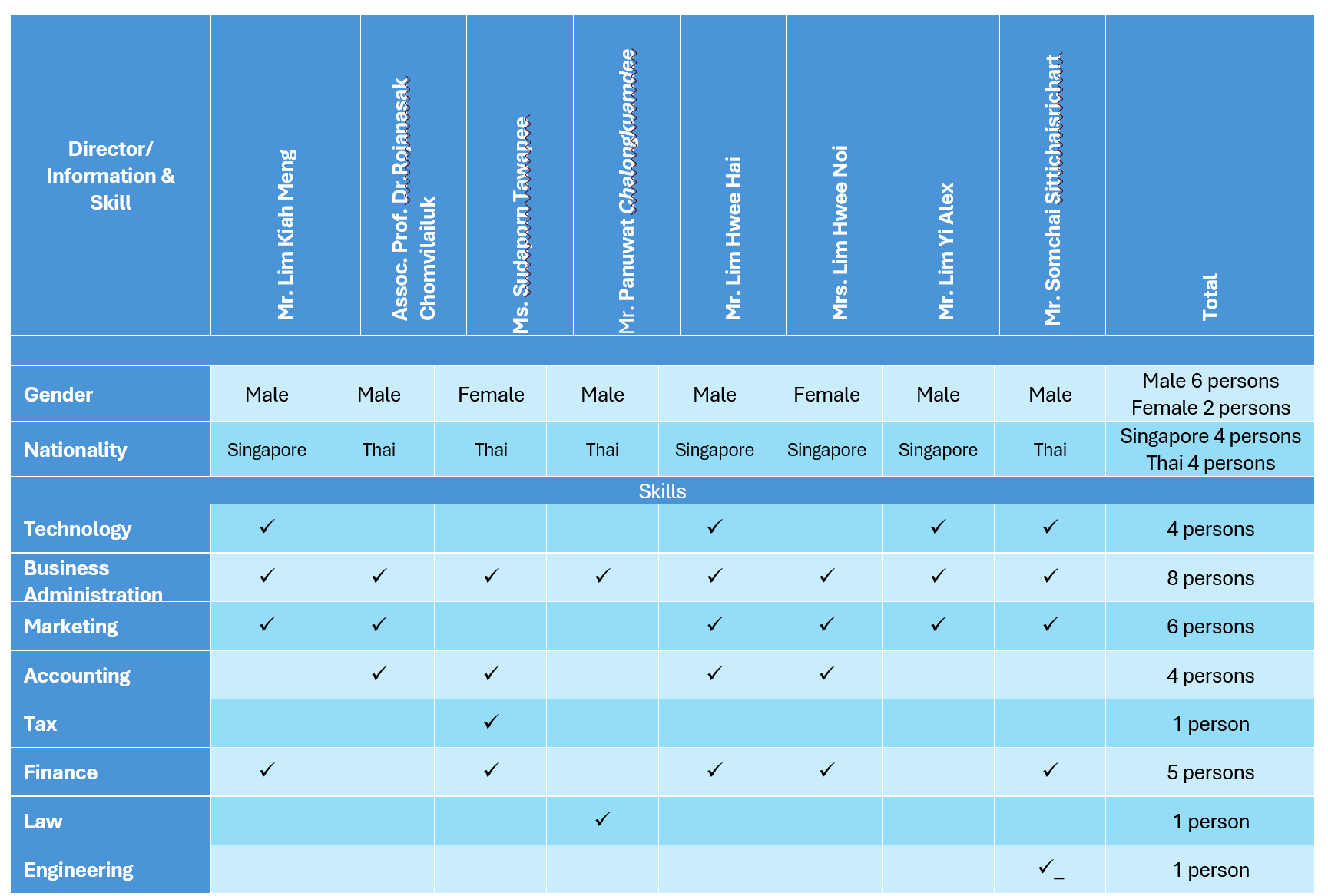
| Other guidelines regarding the board of directors | Diversity of the Board of Directors’ Structure | The Board of Directors plays a crucial role in defining and approving the Company’s vision, mission, strategies, goals, business plans, and budget, as well as overseeing management to ensure effective implementation of these plans. The Board of Directors is also responsible for monitoring performance to ensure compliance with applicable laws, regulations, and shareholders’ resolutions, thereby achieving objectives efficiently and supporting the Company’s sustainable growth. The Company places importance on diversity in the Board’s composition across multiple dimensions. Accordingly, it has established a policy to ensure that the Board is diverse in various respects, including experience, educational background, gender, race, and nationality. The Company has set targets for the Board to comprise at least 10% female directors of the total number of directors and to include at least one director with experience relevant to the Company’s business. In 2025, the Company successfully achieved these targets. The Board of Directors comprises both Thai and foreign directors, including two female directors, three independent directors, and five directors with experience related to the Company’s business. In addition, independent directors represent more than one-third of the total Board members, and non-executive directors constitute half of the Board. This composition ensures independent and transparent decision-making while maintaining a proper balance of power in corporate governance.
In addition to having non-executive directors with direct experience in the Company’s line of business, the Board of Directors unanimously resolved in 2018 to appoint Mr. Panuwat Chalongkwamdee, an independent director, as the Lead Independent Director. His primary responsibilities include coordinating with the Chairman to set meeting agendas, thereby enhancing the Company’s corporate governance framework. |
| Other guidelines regarding the board of directors | Leadership and Vision of the Board of Directors | The Board of Directors plays a pivotal role in setting the organization’s direction and vision, guided by the principles of sound corporate governance to create long-term value for shareholders and stakeholders. The Board of Directors comprises professionals with diverse expertise who exercise independent judgment and are capable of devising strategies that effectively respond to shifts in the business environment.
|
| Other guidelines regarding the board of directors | Corporate Governance Participation | The Company encourages all stakeholders to actively participate in a robust corporate governance framework by emphasizing transparency in information disclosure and providing accessible channels for feedback. The Company implements the following initiatives:
|
| Other guidelines regarding the board of directors | Disclosure on Security Trading by the Directors and the Management | To enhance transparency and prevent conflicts of interest, the Company requires the directors and the Management to disclose their transactions in the Company’s securities in accordance with sound governance practices as follows:
|
| Other guidelines regarding the board of directors | Reports Stating the Interests and Security Holding of the Directors and the Management | The Company has established a process to review and report on the interests of directors and the Management, ensuring operations remain transparent and free from conflicts of interest. The requirements are as follows:
|
| Other guidelines regarding the board of directors | Internal Control and Audit System | The Company has established a systematic approach to monitoring and overseeing compliance with its internal control and risk management policies. The Board of Directors plays a critical role in ensuring that the Company maintains an effective and adequate internal control and risk management system to manage potential risks. This system encompasses the following key areas:
To enhance the robustness of the internal control and audit system, the Board of Directors has appointed the Audit Committee to oversee and coordinate with the Quality Assurance Department. The Audit Committee plays a key role in reviewing and assessing the Company’s internal control system across the following eight core areas:
The Audit Committee regularly reviews internal audit findings with the Quality Assurance Department and discusses during the Audit Committee’s meeting. Additionally, the Audit Committee maintains close communication with the Risk Management Committee through its secretary to align audit activities with the Company’s risk assessment framework. This ensures that internal control measures are continuously adapted to evolving business conditions. Furthermore, the Company conducts an annual assessment and review of the adequacy of its internal control system in accordance with the guidelines issued by the SEC. This process ensures that the internal control system remains relevant, up to date, and capable of effectively responding to changes in the business environment. |
Policy & Practices — Shareholders and Stakeholders
Has Policy & Guidelines for Shareholders and Stakeholders
Yes
Shareholder & Stakeholder Guidelines
| Guideline | Detail |
|---|---|
| Shareholder | Shareholders have the right to oversee the Company through the appointment of the Board of Directors and decision-making on significant matters, such as the purchase, sale, or transfer of shares, receipt of dividends, access to corporate information, and voting at shareholders’ meeting on issues such as director appointments, dividend payment, amendments to Company’s Article of Association, and changes in capital structure. The Company operates with transparency and efficiency to generate appropriate short-term and long-term returns while ensuring equitable treatment of all shareholders. The Company respects and protects shareholder rights as stipulated by law and corporate regulations, particularly fundamental rights as follows: 1) Right to Participate in Shareholder Meetings and Vote on Key Matters
2) Right to Receive Accurate, Complete, and Timely Information
3) Right to Receive Profit Distribution from the Company’s Operations
4) Right to Buy, Sell, or Transfer Shares
Additionally, the Company has implemented fair measures to protect shareholder rights, including the following policies:
|
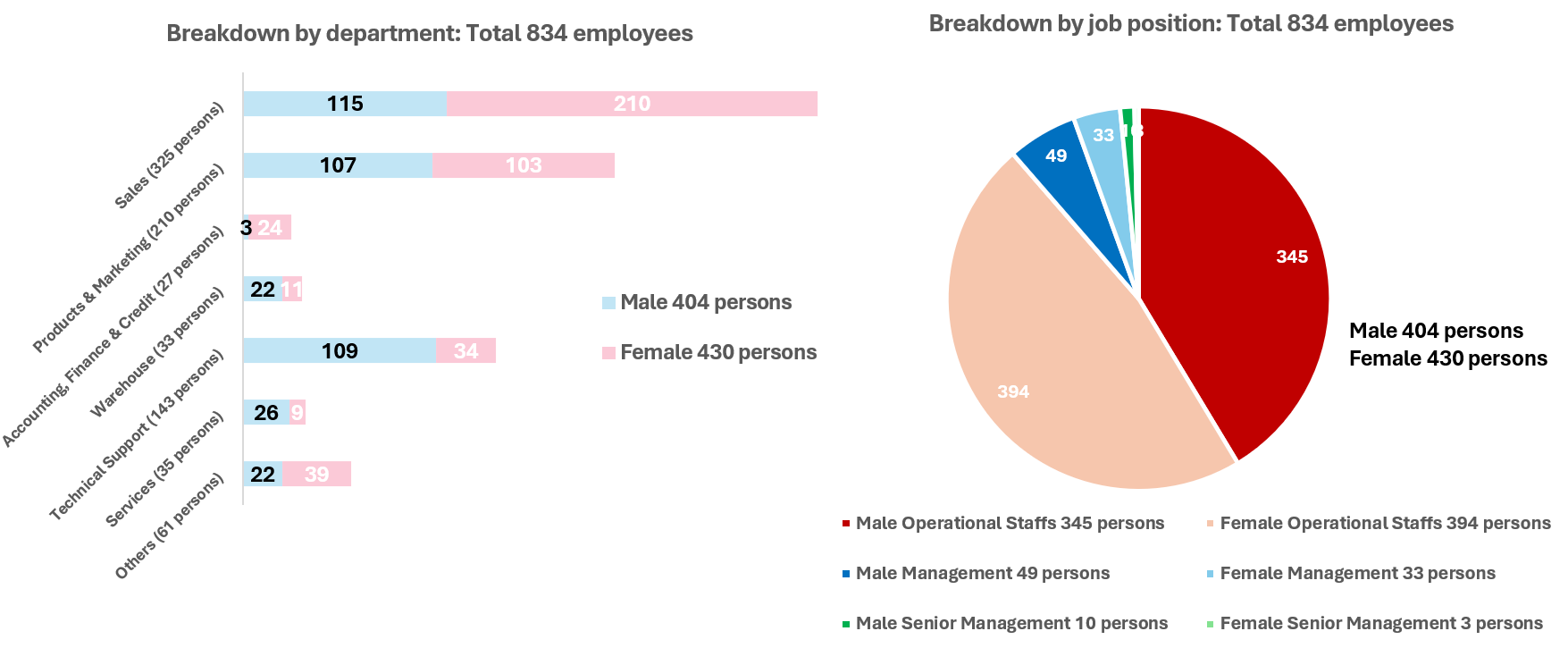
| Employee | The Company recognizes that employees are a fundamental pillar of sustainable success. Therefore, it places great emphasis on effective human resource management to foster a positive work environment and support employees in fully developing their potential. The Company implements the following policies and practices.
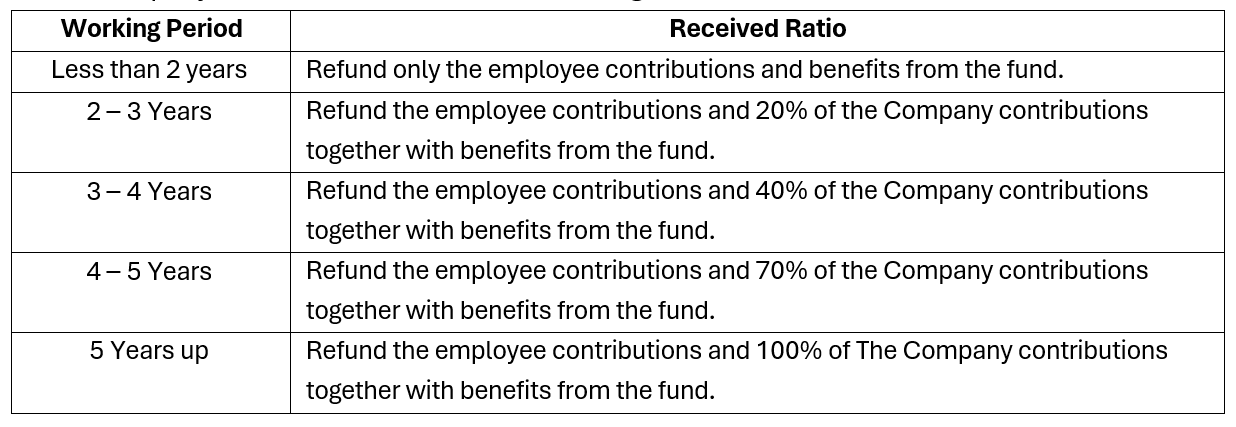
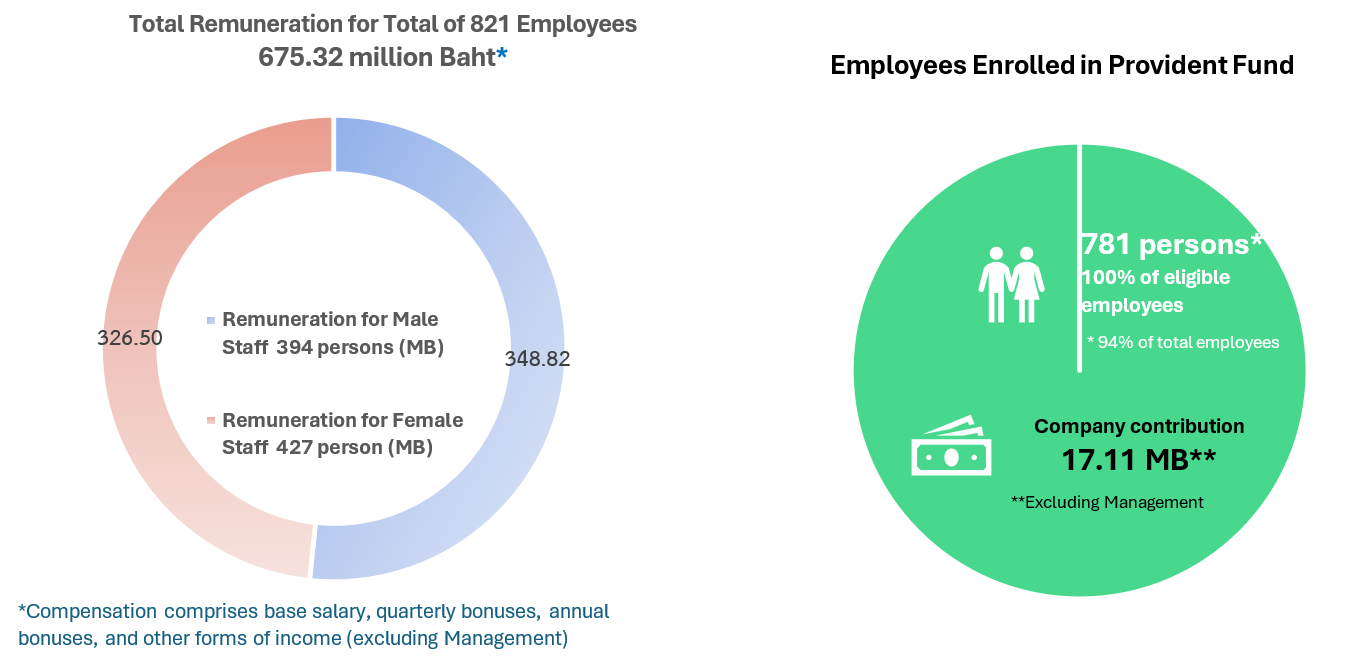
2) Remuneration and Welfare
The Human Resources Department is supported by the Company in coordinating fund service providers to enhance knowledge in selecting investment policies and fund managers, as well as monitoring the management of investments in the provident fund. This is done in accordance with investment governance principles, selecting fund managers who adhere to these principles, and considering ESG factors to ensure the long-term benefit of the fund members. The fund manager selection criteria are disclosed to members to ensure transparency in the investment management process.
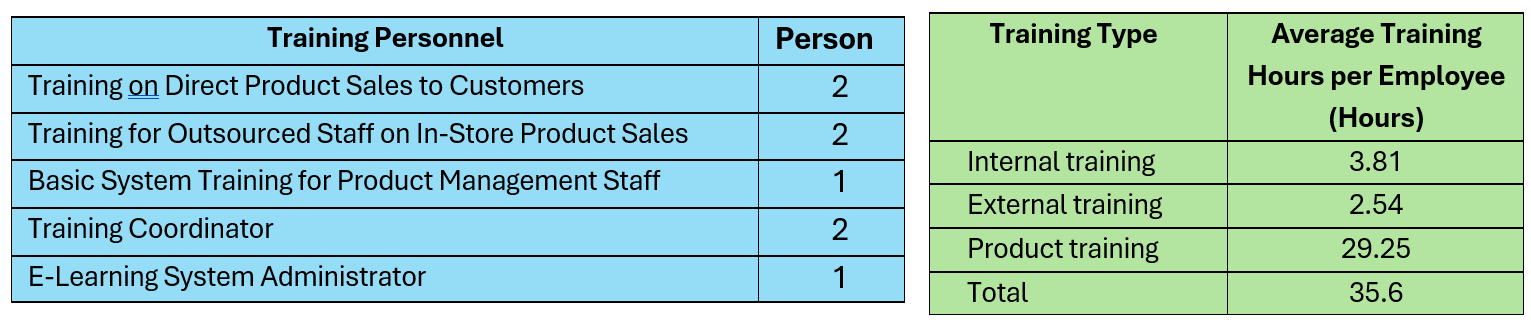
Over the past 3 years, the number of employees has not changed significantly in a way that would impact the Company's operations. However, the Company continues to recruit additional employees to support its ongoing business expansion. 3) Employee Development
4) Work Environment and Corporate Culture
5) Employee Health and Safety
6) Employee Rights and Workplace Fairness
7) Performance Evaluation and Motivation |
| Customer | The Company recognizes the importance of customers as key business partners contributing to its success. It is committed to conducting business responsibly, transparently, and with a strong focus on customer satisfaction. The Company prioritizes product and service quality, fairness in business operations, sustainable development, and fostering long-term customer relationships. The key practices include:
2) Transparency in Product and Service Communication
3) Enhancing Customer Satisfaction and Relationships
4) Enhancing Customer Satisfaction and Relationships
5) Sustainable Growth and Development with Customers
|
| Business competitor | The Company is committed to conducting business under the principles of free and fair competition, believing that transparent and fair competition is a key mechanism in enhancing industry efficiency and market growth. The Company has established the following guidelines for dealing with business competitors:
2) Compliance with Legal Frameworks
|
| Business partner | The Company conducts business with its partners in a professional, transparent, and fair manner to foster sustainable and mutually beneficial relationships. The Company is committed to adhering to transparent and fair procurement principles, taking into consideration product quality, social responsibility, and ethical business practices, as outlined below:
2) Enhancing Business Partners’ Capabilities and Capacity
3) Measures for Fairness and Codes of Conduct for Business Partner
|
| Creditor | The Company recognizes the importance of creditors as key stakeholders in its business operations, particularly financial institutions providing loans and trade creditors extending credit terms. The Company therefore places great emphasis on treating creditors fairly, transparently, and responsibly, including the disclosure of accurate, complete, truthful, and timely information, in order to strengthen confidence and maintain stable and sustainable business relationships.
2) Creditor Management Practices
|
| Government agency | Given the Company's business operations involving importation and product sales, it is necessary to engage with various government agencies throughout multiple stages, including import procedures, customs clearance, permits, certifications, and distribution. The Company is committed to full compliance with all applicable laws, regulations, and government directives to ensure that its operations are conducted legally, transparently, and in accordance with established standards. To achieve this, the Company has established the following measures: 1) Transparency and Fairness
2) Disclosure and Reporting
3) Awareness and Compliance Culture
4) Internal Controls and Auditing
|
| Community and society | The Company recognizes the importance of conducting business responsibly towards the community and society. It is committed to adhering to good corporate governance principles while complying with applicable laws and international standards to create a sustainable positive impact on society. The Company has established the following key practices: The Company places great emphasis on transparency and business ethics, strictly prohibiting the directors, the Management, and employees from engaging in any form of corruption. Preventive measures include:
2) Community and Society Development Engagement
3) Human Rights Implementation Measures
In 2025, the Company revised its human rights policies and practices in line with relevant regulations and additional recommendations from partners and customers. No reports of human rights violations or related complaints were received. 4) Personal Data Protection
5) Information Technology Security
|

Code of Conduct
Has a Business Code of Conduct
Yes
Code of Conduct Description
The Company operates its business with a strong commitment to ethical principles and corporate governance, emphasizing transparency, integrity, and fairness to build trust among all stakeholders, including employees, business partners, customers, shareholders, regulatory authorities, and society.
To guide business operations, the Company has established a Business Code of Conduct covering key areas such as:
Responsibilities to the Company and shareholders.
Responsibilities to employees, customers, business partners, and competitors.
Responsibilities to creditors and financial institutions.
Responsibilities to regulatory authorities.
Responsibilities to society, communities, and the environment.
Additionally, the Company has developed relevant policies to reinforce clear operational guidelines and has established a Code of Conduct for Business Partners to ensure that customers, partners, and agents adhere to ethical standards aligned with the Company’s values.
The Company communicates the Business Code of Conduct to all directors, the Management, and employees to raise awareness through electronic channels such as email, the Company’s platform and website.
The Business Code of Conduct is reviewed and approved annually by the Board of Directors to ensure its relevance and alignment with applicable laws, regulations, and stakeholder expectations across the supply chain. The Quality Assurance Department is responsible for regularly monitoring compliance with the Codes of Conduct.
The Company encourages employees and stakeholders to report any violations of the Business Code of Conduct through designated reporting channels, with appropriate whistleblower protection measures in place. In 2025, no violations of the Business Code of Conduct were reported, reflecting the Company's strong culture of integrity and commitment to sustainable business practices.
To ensure accessibility for all stakeholders, the Company has disclosed the Business Code of Conduct and related policies in Attachment no.5 of Form 56-1 One Report and on the Company’s website.
Code of Conduct Practices
| Guideline | Other — Please Specify | Detail |
|---|---|---|
| Prevention of Misuse of Inside Information | The Company prioritizes transparent management of conflicts of interest and has established a Conflicts of Interests Management Policy to guide its operations. The directors, the Management, and employees are required to avoid activities that may compromise the Company’s interests. All related-party transactions must be carefully and transparently considered. Details of this policy are available in Attachment no. 5 of the Form 56-1 One Report and on the Company’s website. | |
| Anti-corruption | The Company is committed to combating bribery and corruption in all forms, both direct and indirect. An Anti-Bribery and Corruption Policy has been established to serve as a guideline for the directors, the Management, and employees. Reports or complaints regarding corruption can be submitted through designated reporting channels as outlined in the Anti-Bribery and Corruption Policy, which is disclosed in Attachment no.5 of the Form 56-1 One Report and on the Company’s website. Additionally, in 2024, the Company became a member of the Thai CAC, reaffirming its commitment to upholding the highest ethical standards and full compliance with anti-corruption regulations at both national and international levels. | |
| Whistleblowing and Protection of Whistleblowers | Complaints Managing Procedure The Company designates the Audit Committee as responsible for managing complaints related to non-compliance with the Anti-Bribery and Corruption Policy. A specific committee will be appointed to assess and handle complaints and clues on a case-by-case basis. The appointment of this committee will prioritize independence and appropriateness in addressing the specific complaints. The procedures for managing clues and complaints related to corruption are as follows:
Complainants and Whistleblower Protection Measures
| |
| Preventing the Misuse of Inside Information | The Company recognizes the importance of safeguarding confidential information and preventing the misuse of inside information for personal gain. Accordingly, the Company has established a Confidential Information Protection and Controlling the Use of Inside Information Policy as an operational framework. These policies prohibit directors, executives, and employees from using the Company’s non-public information to trade securities or to obtain personal benefits. In addition, the Company requires directors and executives to report their securities transactions, as well as those of their related persons, to the Company to enable transparent monitoring. Directors, executives, and employees are also required to refrain from trading the Company’s securities during the quarter-end period until the Company’s financial statements are publicly disclosed. The confidentiality and insider trading policies are disclosed in the Form 56-1 One Report (Attachment no.5) and on the Company’s website. | |
| Prevention of money laundering | The Company places great importance on complying with applicable laws and regulations on anti-money laundering and counter-terrorism financing. The Company has established a clear Anti-Bribery and Corruption Policy to ensure that its business operations are transparent and secure, and to prevent the Company from being used as a channel for money laundering or the financing of terrorism. This policy is disclosed in the Form 56-1 One Report (Attachment no.5) and on the Company’s website. The Company prohibits directors, executives, and employees from being involved in money laundering or the financing of terrorism in any form, whether directly or indirectly. The Company also maintains risk management and internal control measures that cover these matters. | |
| Giving or receiving gifts, entertainment, or business entertainment | The Company recognizes the importance of preventing fraud and corruption that may arise from the giving or receiving of gifts, assets, or business hospitality. Accordingly, the Company has established Receiving or Giving of Gifts, Assets, or Other Benefits Policy to serve as a guideline for employees in the performance of their duties. | |
| Compliance with laws, rules and regulations | The Company is committed to complying with all applicable laws, regulations, and ethical standards relating to its business operations, both domestically and internationally. The Company has implemented rigorous processes to ensure that all of its activities comply with relevant trade compliance requirements. Accordingly, the Company has established a Trade Compliance Policy to serve as an operational guideline. This policy is disclosed in Attachment no.5 of the Form 56-1 One Report and on the Company’s website. | |
| Use and maintenance of data and assets | The Company places importance on safeguarding and using the Company’s assets efficiently. Accordingly, the Company has established a Protecting and Using of the assets of the Company Policy as a guideline. Under this policy, all directors, executives, and employees are responsible for using the Company’s assets appropriately and are prohibited from using such assets for personal gain or for the benefit of others, in order to ensure the Company’s business operations are conducted smoothly and efficiently. | |
| Anti-competitive | The Company is committed to conducting its business in accordance with good corporate governance principles and competing fairly in the marketplace. To ensure that its operations do not result in unfair restrictions on competition, the Company has set out unfair competition and antitrust guidelines under its Trade Compliance Policy as an operational framework. The Company maintains a policy of refraining from any actions that may restrict or distort fair trade competition. The Company will not enter into agreements or arrangements with competitors or other business operators that could lead to monopolization, reduced competition, or violations of applicable competition laws. This includes, without limitation, illegal price fixing, bid rigging, unlawful boycotts under applicable laws, market allocation, other unlawful restraints of trade, and forcing customers to use specific distributors. | |
| Cyber security | The Company places strong emphasis on the security of data and information technology systems. The Company has established an Information Systems Security Policy to protect its information assets and to safeguard data against unauthorized access. The policy covers access controls, network management, and cyberattack prevention, as well as the management of the Company’s information assets. All executives and employees are required to comply with the Company’s security policies and guidelines. In addition, the Company has defined procedures and measures for risk assessment and for responding to information security incidents and provides training to employees to enhance awareness and knowledge of information security. | |
| Environmental management | The Company is committed to conducting business responsibly with due regard for the environment and has implemented environmental management practices in compliance with applicable laws and relevant requirements. The Company emphasizes environmentally friendly procurement and the offering of products that are safe for users and the environment. The Company also aims to reduce air pollution and GHG emissions through the use of transportation technology and efficient energy management. | |
| Human rights | The Company is committed to protecting and respecting the human rights of all stakeholder groups, based on principles of equal treatment and respect for individual rights in all aspects. Accordingly, the Company has established a Human Rights Policy covering the promotion and respect of human rights protection in accordance with applicable laws and relevant international treaties and standards. The Company adheres to fair labor practices, non-discrimination, and opposes human trafficking and human rights violations across all areas of its business. In addition, the Company emphasizes compliance with occupational health and safety principles, does not support child labor, and provides multiple channels for receiving complaints related to human rights violations. This is to ensure transparent and ethical operations and respect for the rights of all relevant parties. The Human Rights Policy is disclosed in Attachment no.5 of the Form 56-1 One Report and on the Company’s website. | |
| Occupational health and safety | The Company is committed to providing a safe and healthy working environment. The Company has developed a safety management system in line with labor laws and relevant standards, including risk assessments to prevent potential hazards in work processes. The Company also emphasizes the provision of appropriate resources, such as personal protective equipment (PPE), fire prevention systems, and fire evacuation drills. In addition, the Company provides training on occupational health and safety and promotes employee well-being through annual health check-ups and medical benefits. The Company collects and maintains data for accident analysis and root-cause identification to implement preventive and corrective actions, thereby effectively reducing workplace risks and ensuring that all employees work in a safe and healthy environment. | |
| Other guidelines related to business code of conduct | Other Business Ethics Practices Relating to Business Codes of Conduct | In addition to the aforementioned policies and guidelines, the Company has established other related policies, which are disclosed in Attachment no. 5 of the Form 56-1 One Report and on the Company’s website as part of its commitment to responsible business practices. |
Promoting Compliance with the Code of Conduct
Promotes Compliance by Directors, Executives and Employees
Yes
Description
The Company reviews and submits the Codes of Business Ethics and related policies to the Board of Directors for consideration and approval on an annual basis. The Company also communicates and provides training to Management and employees through electronic channels, together with assessments to evaluate understanding. Compliance with the Codes of Business is included as a topic and component of performance evaluations to promote consistent and organization-wide adherence.
Anti-Corruption Networks & Projects
Joined or Declared Intent to Join Anti-Corruption Networks
Yes
Networks & Projects Joined
| Network / Project | CAC Certified |
|---|---|
| Thai Private Sector Collective Action Against Corruption: CAC | Y |
| United Nations Global Compact (UNGC) | |
| Participation of anti-Corruption networks and initiatives |
Material Changes & Developments in CG
Reviewed the CG Policy or Board Charter in the Past Year
Yes
Material Changes or Developments in the Past Year
Yes
Policy Review — Description
The Company has reviewed and updated its corporate governance policies, board charters, Codes of Conduct, Codes of Conduct for Business Partners, and related policies. These updates have been reviewed and approved by the Board of Directors to ensure that the Company’s operations adhere to good corporate governance principles and maintain transparency.
Implements the CG Code for Listed Companies
Yes
CG Code — Description
The Company recognizes the importance of good corporate governance and adheres to the principles established by the SEC to enhance transparency, accountability, and business sustainability. The Company has adopted the following corporate governance principles as guidelines for its operations:
Board Structure and Responsibilities: The Company has established a board comprising independent directors with diverse expertise to oversee governance and set policies aligned with the organization's long-term value creation objectives.
Sustainable Strategy and Corporate Management: Business objectives and goals are set with consideration for economic, social, and environmental impacts to ensure sustainable growth.
Enhancing Board Effectiveness: The Company emphasizes the selection and appointment of qualified and ethical board members, along with continuous performance evaluations.
Management Recruitment and Talent Development: The Company supports the development and capacity-building of its workforce and establishes clear criteria for selecting and developing senior Management capable of leading the organization toward its goals.
Promoting an Ethical and Responsible Corporate Culture: The Company fosters ethical business practices and corporate responsibility, ensuring that all employees adhere to established ethical standards.
Risk Management and Internal Controls: The Company implements an effective risk management and internal control system to mitigate potential business risks.
Disclosure and Transparency: The Company ensures accurate, complete, and timely disclosure of information to shareholders and investors, enabling well-informed investment decisions.
Fair Treatment of Stakeholders: The Company upholds the rights of shareholders, customers, business partners, employees, and society by conducting business ethically and responsibly toward all stakeholders.
Other CG Performance & Outcomes
In 2025, the Company has outlined measures to address corporate governance principles that have not yet been fully implemented, as follows:
Chairman is not an independent director: The Chairman of the Board of Directors is currently a non-executive director with expertise in the business sector and holds a directorship in a major shareholder company. However, the Company has clearly defined the Chairman’s roles and responsibilities and has appointed a Lead Independent Director to assist in setting the Board of Directors’ meeting agenda.
Independent Director Tenure Exceeding 9 Years: In 2025, one independent director has served for more than nine years due to their extensive expertise and professional experience, which contribute to board effectiveness and diversity. The Company has established strict criteria for assessing the qualifications of independent directors serving beyond nine years and regularly reviews these qualifications to ensure continued independence.
Corporate Governance Performance
In 2025, the Company continued to strengthen its corporate governance framework, resulting in a more robust governance practice. Key developments were as follows:
Review and enhancement of Vision, Mission, Codes of Conduct, and related policies to align with good corporate governance principles, sustainable business practices, and the Company’s strategic direction. The Company also upgraded its Supplier and Partner Code of Conduct to promote an ethical, transparent, and fair supply chain.
Review and update of corporate governance and sustainability policies and guidelines to ensure they remain current with regulatory requirements, the SET guidelines, and relevant best practices, thereby enhancing the effectiveness of oversight and disclosure.
Systematic development and monitoring of corporate governance and sustainability action plans by integrating ESG issues into the Company’s strategy, annual plans, and performance indicators, and linking these, as appropriate, to the risk management framework and internal control system.
Enhancement of stakeholder communication and disclosure processes to ensure disclosures are appropriate, timely, transparent, and verifiable, while promoting the use of digital technology to collect, manage, and disseminate information to reduce duplication, improve accuracy and completeness, and support traceability.
Ongoing implementation of anti-bribery and anti-corruption measures, including communicating practices to employees and business partners, providing whistleblowing/reporting channels, and ensuring proper, transparent, and auditable complaint handling, along with monitoring external assessments/recognition to continuously raise standards.